








Custom NFC Talking Reading Pen Manufacturer
A custom NFC talking reading pen connects physical books, flash cards and learning objects with responsive audio. For publishers, education brands, distributors and toy companies, the real product is the complete interaction system: reliable tag recognition, controlled audio mapping, comfortable handling, clear feedback, durable printed media and repeatable production.
The images on this page show an OEM/ODM concept direction. Exact electronics, memory, battery, charging, connectivity, functions and compliance scope must be selected, engineered and verified for the final project.
Start with the learning promise, not a feature list
A successful custom reading pen begins with one observable promise: when a learner touches a defined area on approved printed material, the correct audio starts quickly and clearly. That statement creates a shared target for content, printing, firmware and hardware teams. It also stops optional functions from distracting the project before the core interaction works.
Write the intended journey from power-on to the first successful touch. Include how the learner selects a book or language, what happens on repeated touches, how audio is paused, and how the pen reports an unsupported page. Convert each step into a test that can be repeated on every sample revision.

A clear front view for product evaluation
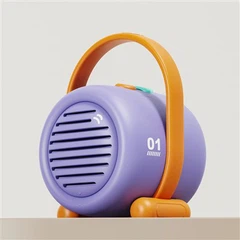
The first image presents the white-and-lavender NFC talking reading pen from the front, with speaker openings, simple buttons and a rounded reading tip. It gives buyers a clean reference for reviewing proportions, grip, control position, logo area and visual direction before engineering specifications are frozen.
Choose NFC tagging only after mapping the use case
NFC can associate physical learning pieces with digital audio through embedded tags or labels. The final architecture depends on tag location, read distance, object thickness, antenna design, content storage and update requirements. A book page, flash card, game board and molded toy do not create the same reading conditions, even when they use the same content library.
Ask the supplier to demonstrate the most difficult intended material, not a convenient laboratory card. Test several tag positions, orientations and stacking conditions. Record successful and failed reads, response time and behavior near metal, batteries or neighboring tags. The approved antenna and enclosure arrangement should then be protected through engineering changes.
Turn a tap into a predictable learning response
A tagged book or card identifies the selected learning point, the pen reads the programmed ID and the matching audio plays. Buyers should define recognition distance, response time, retry behavior and the message used when a tag or content file is unavailable.

Create a content map that survives revisions
Every touch point needs a controlled relationship among the physical tag, printed artwork, content ID and audio file. If these elements are managed separately, a small naming or layout change can play the wrong word, story or instruction. The problem grows quickly when a program contains multiple themes, languages and regional editions.
Use a master table with unique IDs, page or card references, language, filename, duration, revision and approval status. Include silence trimming, loudness targets and pronunciation approval. Before mass loading, run an automated completeness check and a manual listening pass using production-intent books or cards.

Specify functions instead of relying on icons
Volume, playback, recording, language selection and lighting may be proposed, but each function must be confirmed for the chosen hardware and firmware. The control map should say exactly what a short press, long press and status light means in every operating state.
Design the pen for small hands and real routines
The illustrated housing uses a rounded body, tapered reading end and a limited number of front controls. Ergonomics should be assessed with the target age, grip styles and task duration in mind. Button force, spacing, speaker position and charging access all affect whether children can operate the product independently.
Test right- and left-handed use on flat books, flash cards and upright displays. Watch whether fingers cover the speaker, press a button accidentally or tilt the sensor away from the target. Evaluate drops, repeated tip contact and surface cleaning on the chosen materials and finish rather than on a cosmetic display model.
Build one platform for several curriculum formats
Picture books, vocabulary cards, phonics activities, quizzes and museum or classroom materials can share a pen platform when identifiers and audio libraries are governed consistently. A pilot should cover the hardest page materials and the longest, shortest and multilingual files.

Make audio intelligible at comfortable volume
For language learning, consonants and short phonetic contrasts must remain clear at low and moderate volume. A louder speaker does not guarantee better comprehension. Enclosure cavity, grille area, amplifier tuning, file mastering and table vibration can change the result after a module is installed in the final pen shell.
Prepare a listening set with speech, songs, effects and quiet passages. Compare every volume step in a classroom and a quiet home setting. Check startup prompts, error sounds and low-battery alerts as carefully as lesson audio, because repeated harsh prompts can weaken the overall product experience.

Design for independent, screen-free discovery
A child can touch a picture, word or activity marker and hear immediate audio without navigating a display. The useful benefit is not merely screen-free play; it is a repeatable action-and-response loop that supports pronunciation, listening, recall and self-directed exploration.
Define controls and feedback as a complete state map
Power, volume, repeat, recording or mode buttons must behave consistently. LEDs and tones should answer basic questions: Is the pen on? Is it charging? Did it recognize a tag? Is content missing? Is memory full? A pretty icon set cannot compensate for ambiguous responses.
Document short press, long press and combined-button behavior for each mode. Include automatic sleep, wake-up, restart and recovery after interrupted charging. Run an unassisted test with people who have not seen the design; their hesitation often reveals missing feedback faster than an engineering checklist.
Keep OEM choices in controlled workstreams
Housing color, logo, button graphics, voice prompts, language libraries, tagged print, firmware and packaging should be approved separately. This prevents a late artwork change from silently breaking the tag map, file naming or user instructions.

Plan memory and updates around the business model
Audio can be stored locally, loaded during production or updated by a supported tool, depending on the selected design. Capacity decisions should follow the number of languages, total duration, audio format and expected future expansion. Connectivity should be added only when the buyer has a clear content service and support plan.
Define who prepares the final audio package, who owns the mapping data, how versions are named and how a failed update is recovered. If the product is intended to work offline, prove the complete first-use journey without a phone, account or network. State only the capabilities present in the approved configuration.

Treat packaging as part of first-time success
Gift boxes, window packs and classroom kits need inserts that protect the reading tip, keep accessories organized and explain setup in seconds. The pack list, charging method, compatible materials and language version must match the shipped configuration.
Coordinate print, tags and electronics as one system
The pen cannot be validated separately from the media it reads. Paper thickness, lamination, tag adhesive, cover board, die cuts, artwork placement and packing pressure can affect detection and durability. Sample books or cards should therefore represent final construction, not loose tags attached to plain test sheets.
Agree on tag tolerances and placement marks before artwork release. Inspect tags after printing, binding, lamination and transport simulation. Keep a reference set for incoming inspection and final testing. When a print supplier changes material or process, repeat recognition checks rather than assuming the electronic design will absorb the variation.
Use manufacturing evidence to reduce launch risk
A capable talking pen manufacturer connects industrial design, electronics, firmware, audio processing, printing support, assembly and quality records. Buyers should ask who controls each deliverable and how revisions are locked between sample approval and production.

Build multilingual programs without mixing editions
A reading pen can support language-learning ranges, bilingual books and localized retail editions, but each market needs a deliberate selection flow. Spoken titles, prompts, packaging and printed language labels should agree. Accidental mixing of libraries is especially damaging because the hardware may appear functional while delivering the wrong lesson.
Use separate release packages with checksums or controlled version identifiers. Test accented characters, long filenames and the full language-selection sequence. Have a qualified reviewer approve pronunciation and meaning. Packaging, manuals and customer-support scripts should reference the exact library installed on the shipped SKU.

Verify every critical step, not only appearance
Incoming components, PCB assembly, sensor alignment, speaker output, button response, charging, firmware loading, tag recognition and final packing all need defined checks. Production samples should be compared with the approved golden unit and its controlled test files.
Use prototypes to answer different questions
A visual model can approve shape and color. An electronics bench can prove tag reading and audio. An engineering prototype can test the real antenna, speaker, controls and battery inside a provisional shell. A production-intent sample then verifies molded parts, programmed media, packaging and user instructions together.
Do not ask one early sample to prove everything. Give each stage a question list, test method and decision owner. Freeze only what that sample can demonstrate. This staged approach makes changes visible and prevents attractive concept images from being mistaken for verified specifications or production readiness.
Match the product system to the sales channel
Publishers may prioritize book compatibility, language brands may need precise pronunciation, and distributors may want themed kits with simple replenishment. The ideal configuration follows the content owner, retail promise, user age, market requirements and after-sales plan.

Prepare packaging for retail and classroom handling
A pen may ship alone, with flash cards, with one book or as a multilingual curriculum kit. Each format needs a different insert, accessory count and first-use explanation. The reading tip and buttons require protection from concentrated pressure, while tags and printed pieces must stay flat and correctly grouped.
Run an unpacking test with someone outside the project. Then repeat recognition, charging and audio checks after vibration and drop simulations appropriate to the distribution plan. Confirm barcode, age guidance, language version and included-item statements against the actual packed SKU before final artwork approval.
Translate compliance goals into a test plan
Target-market requirements depend on age grading, materials, battery, radio functions, charger arrangement, packaging and destination. A certificate from a different configuration is not evidence for the new product. Buyers should identify required standards early enough to influence component choices, labeling and the sample schedule.
Create a compliance matrix with market, product configuration, responsible party, laboratory, sample quantity and required documents. Maintain material declarations and component traceability. Any change to battery, plastics, coatings, electronics or accessories should trigger a documented review of whether additional testing is required.
Control production with a golden sample
The golden sample is more than a color reference. It should preserve the approved housing, button feel, reading performance, audio library, prompts, charging behavior, labels, accessories and packaging. Supporting files should identify firmware, content map, artwork and test version so production checks use the same baseline.
Define incoming, in-process and final inspection points. Include sensor alignment, multiple tag reads, speaker distortion, button cycles, charging indication, idle current, cosmetic limits and pack completeness. Keep failure records by lot and defect type so corrective action addresses patterns rather than isolated symptoms.
Give buyers a clear OEM and ODM decision path
An OEM program may adapt an existing platform with brand colors, logo, languages, content and packaging. An ODM program can add a new housing, control layout, connectivity or interaction. These routes carry different tooling, engineering, validation and schedule implications, so a quotation should separate confirmed scope from optional development.
For an efficient review, provide target market, age direction, use materials, expected languages, content volume, tag format, desired controls, charging preference, packaging concept and forecast range. The supplier can then identify open technical questions and propose a sample plan without presenting unverified features as fixed commitments.
From interactive concept to production-ready program
The strongest NFC reading pen OEM project keeps the child's action simple while making the development process disciplined. Begin with a small representative content set, prove recognition and audio in the final physical construction, then expand the library only after the workflow is stable. Buyers gain a more dependable launch when every public claim is tied to the approved hardware, firmware and media version.
For additional technical context, read our smart NFC talking pen guide. Joy also shares visual product-development updates for international buyers reviewing custom learning products.
FAQ
Can the pen, audio, languages and packaging be customized?
Yes. Housing color, branding, prompts, language libraries, tagged media, control behavior and packaging can be developed as controlled OEM or ODM workstreams.
Will one NFC pen work with every tag or book?
Compatibility depends on the selected tag system, mapping, antenna, materials and firmware. The intended books, cards or objects must be sampled and verified together.
What should a buyer prepare for quotation?
Share the market, age direction, media type, languages, content volume, desired functions, charging preference, packaging concept and expected order range.
Why is a pilot content set important?
A representative pilot exposes mapping, pronunciation, loudness, tag-placement and update issues before the complete library and mass-production artwork are released.
Discuss your NFC talking reading pen project directly with Joy: WhatsApp +86 13691793052 · E-mail: xdt05@dtdianzi.com.
Hot Tags: custom nfc talking reading pen manufacturer, China, suppliers, manufacturers, factory, customized, wholesale, bulk, quotation, made in China


