


Coral Axolotl Plush OEM with Blue Gill Fronds
The two blue fans give Coral Axolotl its silhouette. They sit well outside the coral head, leaving room for two dark eyes, a small smile and faint cheek marks. Below the face, rounded feet frame a cream belly with a pale illustrated glow. A custom axolotl plush project can start with this seated character and develop an unpowered or interactive edition from a shared appearance brief. The supplied images are design references. They show the intended visual relationships and proposed features. An agreed sample is needed to establish construction, materials and any working behavior. Joy can discuss the reference set, the target market and what the first sample needs to demonstrate.

The face between the two blue fans
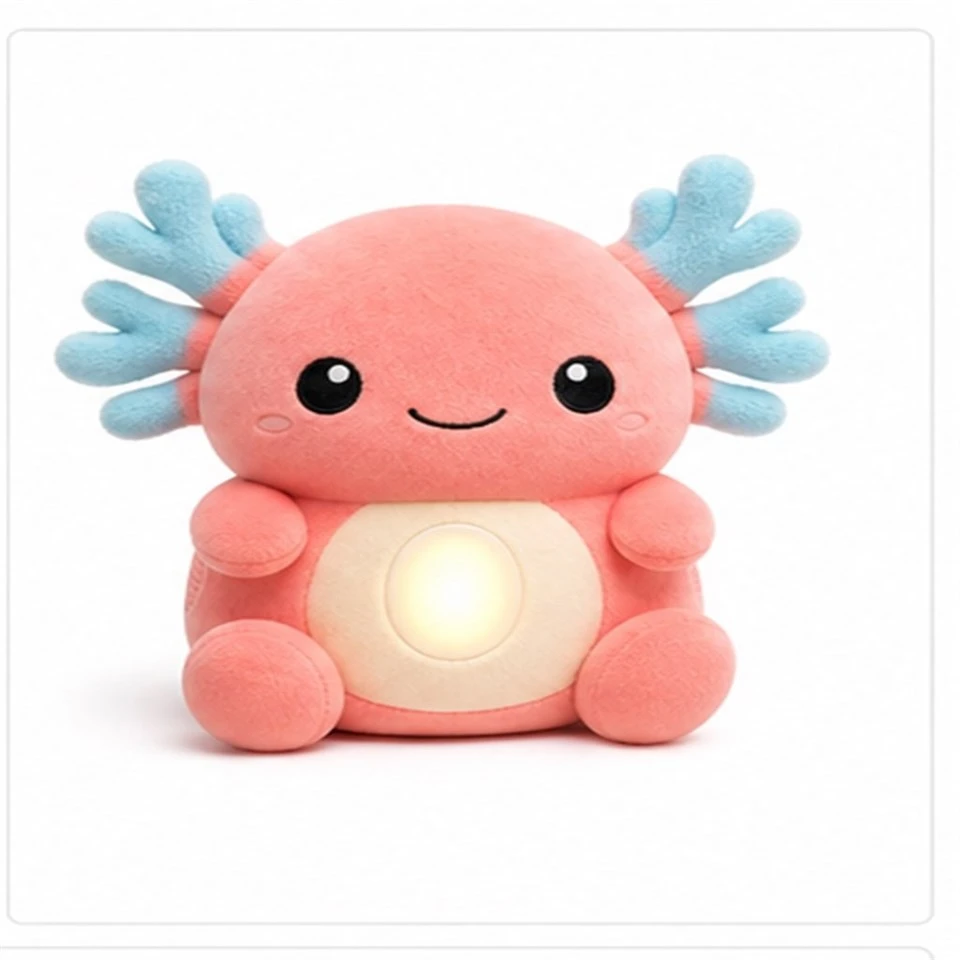
The front view places the gill clusters on either side of a broad coral head. Their tips extend beyond the cheeks, creating an unmistakable outline even when the eyes and smile look small in a thumbnail. For axolotl plush customization, review the fans and face together. Changes at the roots can make the same facial artwork look crowded or unexpectedly wide.
The face relies on a few marks. The dark eyes carry most of the contrast, while the shallow curve of the mouth gives the character its expression. The pale cheek marks are subtle in the neutral view. A sample with larger eyes, stronger cheeks or a deeper smile could feel like a different character even if the overall shape remains close.
A face study can compare these details in the chosen pile. The render shows an eye highlight, but does not identify the method that produces it. Embroidery, applique and attached components are possible directions, subject to the chosen construction and intended user. Photograph the entire face when reviewing changes, so the eye treatment can be judged against the blue fans and the cream panel below.
Where the gills meet the head
The three-quarter illustration shows how the blue branches overlap when the figure turns. For a custom axolotl stuffed animal, this angle makes it easier to judge the depth of the fans and the amount of coral visible around their roots. A convincing front outline can lose its definition if the branches collapse into one thick profile.

The root area brings several visual decisions into a small space. A shallow attachment can leave a neat separation between blue and coral. A bulkier join could push the surrounding fabric outward or leave a groove that catches shadow. Neither outcome can be determined from the finished-looking artwork. The first sewn study should show the proposed join in the same materials selected for the head and branches.
Ask for a photograph at the normal display angle as well as a close view. A close crop can make a small join look larger than it feels in the overall character. Conversely, a distant photograph may hide a kink that changes the outline on a shelf. The two views help the buyer describe a revision without guessing how the stitch pattern was made.

A side detail with a defined purpose
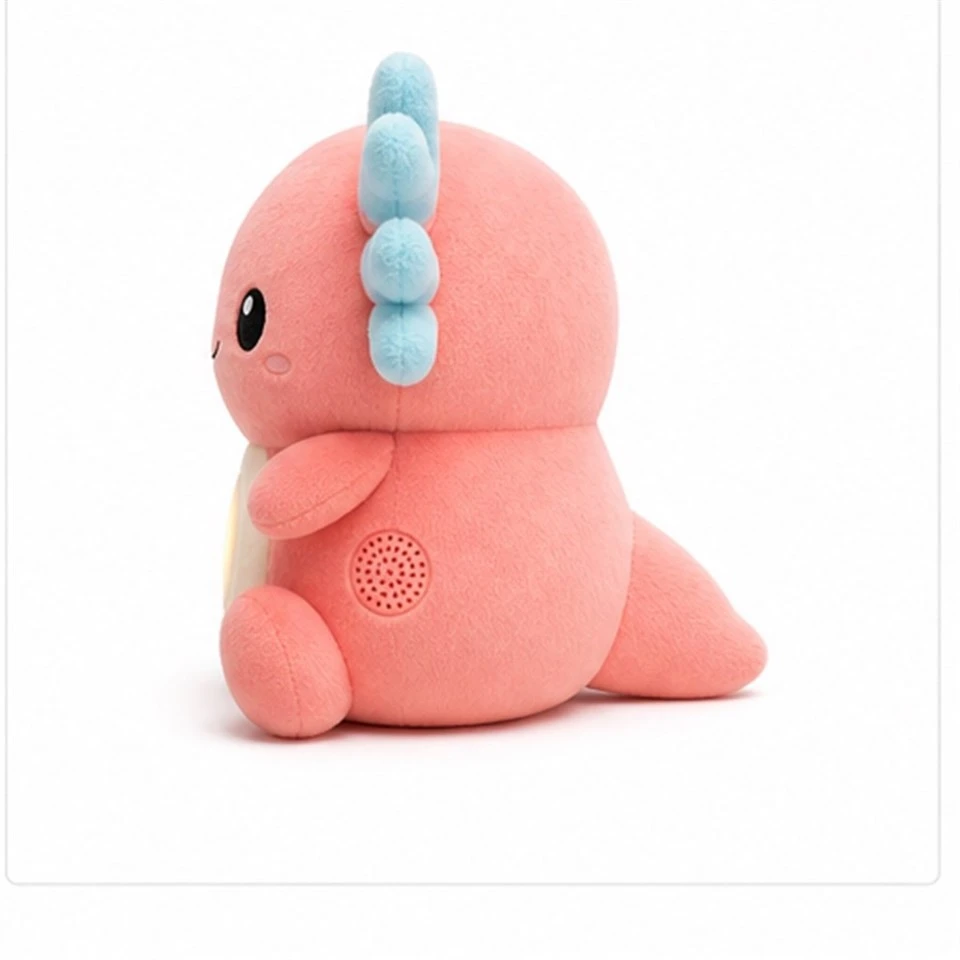
The right profile reveals a circular perforation pattern beneath the small arm. It is a visible design detail on this interactive plush concept. The image does not establish a working speaker or acoustic performance. If sound is selected, decide whether that area is part of the working design and ask to see the actual construction in the prototype.
This position sits close to a part of the character that a user might hold. A sound proposal needs to account for the arm, fabric and other material that may surround the output. The buyer can define the intended listening situation and ask the development team to demonstrate the selected response under those conditions. A successful electronics bench demonstration would answer a different question from listening to the finished plush assembly.
For an unpowered edition, the side mark can be considered independently. It might be removed for a simpler surface or retained only if it belongs to the selected character artwork. The specification should explain the decision. Otherwise a drawing can lead one team to quote a plain shell and another to assume a functional opening.
Allow for the whole seated outline
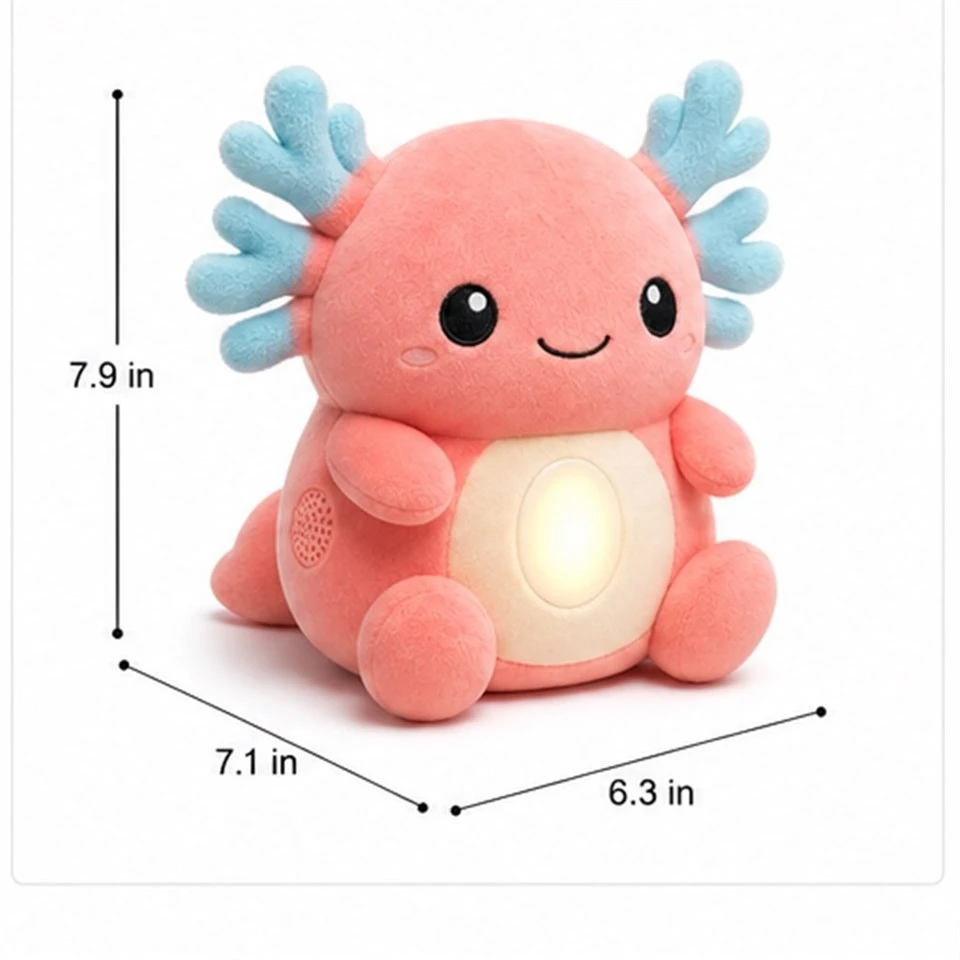
The dimension board places the coral body, blue fans and rearward tail within a proposed envelope. A private label axolotl plush needs agreed measurement points on a physical sample. The widest part could include flexible gills, and the tail can determine rear clearance even though it is barely apparent in a straight front photograph.

Choose which dimensions help the buyer make a decision. A retail team may need the natural display width and rear clearance. A packaging team may need the same sample measured in its agreed packing position. They can use the same item for both assessments while documenting the conditions separately. The numbers on the illustration remain proposals until checked against that item.
A scale mockup also helps where the first question is visual. Place it in a representative shelf space with the expected viewing angle. Check whether the blue tips remain inside the display area and whether the tail changes the apparent position of the face. These observations can guide the next sample without implying a confirmed carton size or a finished specification.

Coral and blue under a warmer light
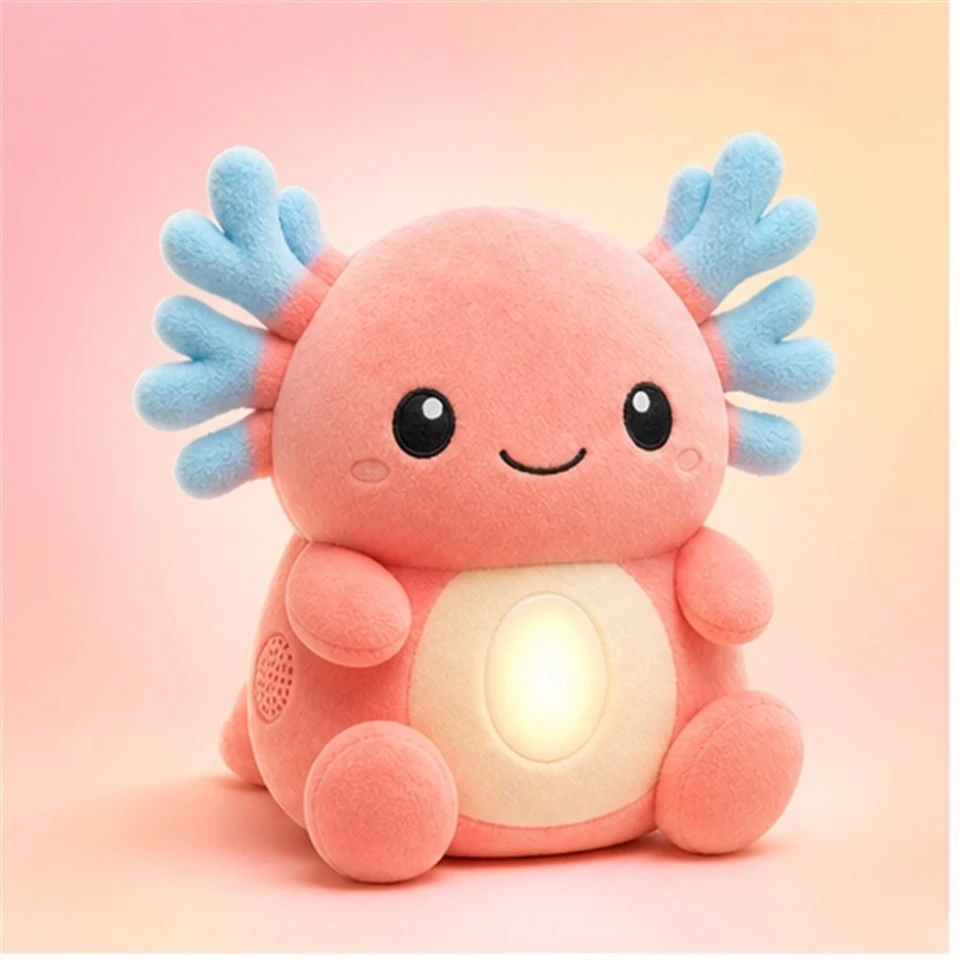
The hero artwork presents the same broad silhouette against a warm pink backdrop. The blue fronds and cream belly remain distinguishable, but the lighting changes the way the coral fabric appears. For a branded axolotl plush, compare this campaign image with neutral references and physical swatches before using it to approve the production palette.
A warm presentation can help explain a collection's mood. The physical color decision belongs to a labeled set of materials viewed together. The buyer should see the coral body beside the blue gills and the cream front, since the relationship between those areas gives the character much of its identity. A change to the shade of one part may affect how the other two are perceived.
The cream belly also needs its own appearance reference. The hero image draws the eye toward its illustrated glow, but the fabric and shape still matter with power off or in an unpowered edition. A sample review can capture that appearance separately and carry it into packaging artwork. This avoids using a lighting effect as the only reference for a permanent textile surface.
The tail anchors the rear view
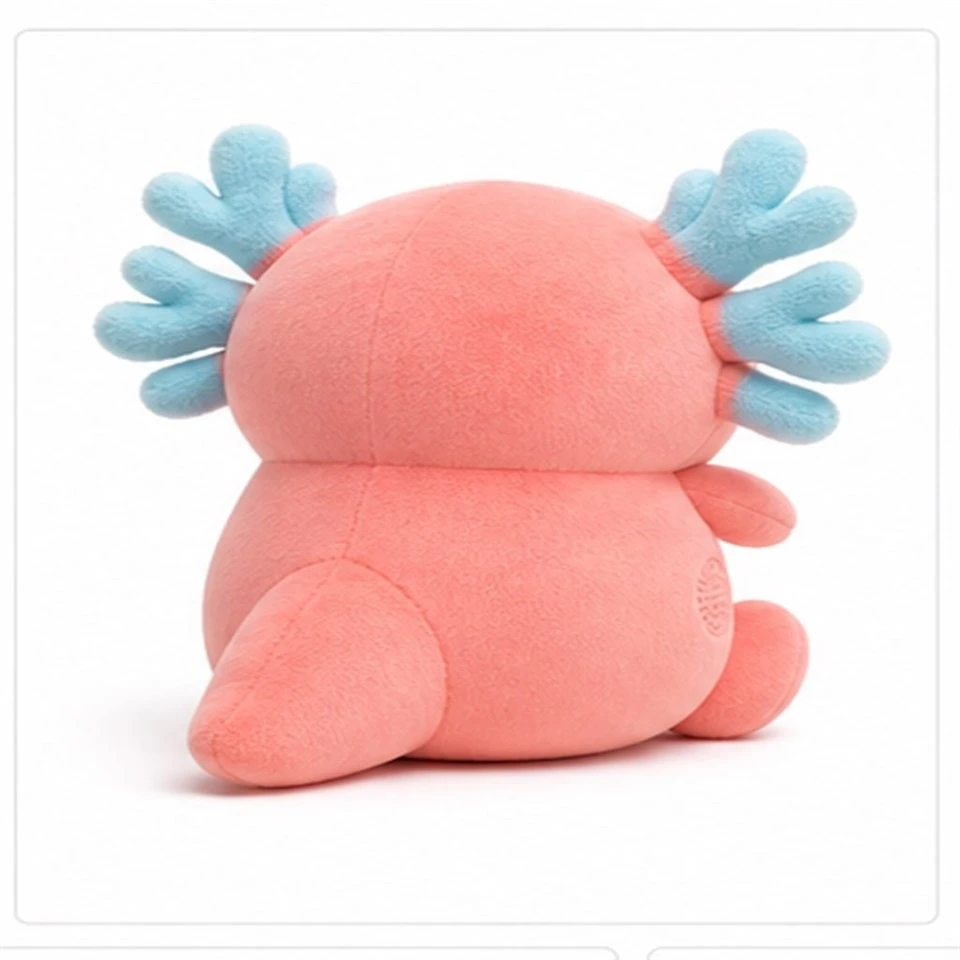
Seen from behind, the tapered coral tail extends from a low point on the body. The blue gill clusters remain visible above it. In an axolotl plush prototype review, this view establishes how the character reads from the back and gives the buyer a way to compare the tail angle with the resting pose.

The rear is a relatively quiet area. Introducing a large label or a service opening could draw attention away from the tail and the broad coral surface. If an interactive version needs access for service or assembly, its placement should appear in the relevant prototype drawings and samples. The supplied rear view does not settle that layout.
Consider how the tail rests when the figure is put down without being arranged. An attractive photograph can be made with a hand positioned just outside the frame, but the product should be evaluated in its intended natural pose. Record the surface and angle used for approval. That gives later reviewers a consistent reference when comparing the junction between the tail and body.

A top view for the two gill roots
From above, the blue clusters frame the head and the coral tail appears beyond the seated body. This view helps a plush pattern development team discuss whether the roots line up and whether either fan twists forward. Compare it with a front photograph, where a small rotation may look like a difference in branch length.
The overhead view also makes the division between head and body easier to locate. A branch cluster placed farther forward can shadow a cheek, while the same cluster set farther back can appear narrower from the front. Marking the preferred orientation on two images is more precise than instructing a maker to match the fan shape from one photograph.
A sewn study can preserve the rhythm of the rounded branches without copying every tiny shadow in the render. Discuss the appearance that matters at normal viewing distance and the acceptable variation on the actual prototype. Keep the selected branch orientation and material reference with the approved sample. A later fabric substitution can then be compared with a specific appearance instead of a generic shade description.
The short arms can also affect how the character reads when held. If a revision makes them wider, compare how much of the cream panel remains visible from the front and from the normal display angle. A feature placed behind an arm may become harder to see, and a brand mark may end up in an area the hand covers. Record the preferred relationship on the appearance sample so later changes to the belly or arm pattern have a reference.
The seated pose is a separate decision
The opposite profile shows the rounded front foot ahead of the coral body and the tail projecting behind it. An axolotl soft toy sample should be reviewed on a level surface in the agreed pose. The resulting silhouette depends on the body, feet and tail working together in the selected construction.

The source views suggest a compact figure with short arms and a fairly broad head. They cannot show how the filling moves under handling or whether the figure will retain its pose after packing. The buyer can ask for the same sample photographed before and after the proposed packing arrangement, with any manual repositioning recorded separately.
The side view also helps when deciding where to place a discreet brand label. A label at a junction can preserve the cream front, but it still needs to fit the construction and show clearly enough for its intended role. Review its placement on the complete character and include it in the package and photography brief. The approved look should be visible without shifting the limbs to cover awkward details.

Set a scene for the edition
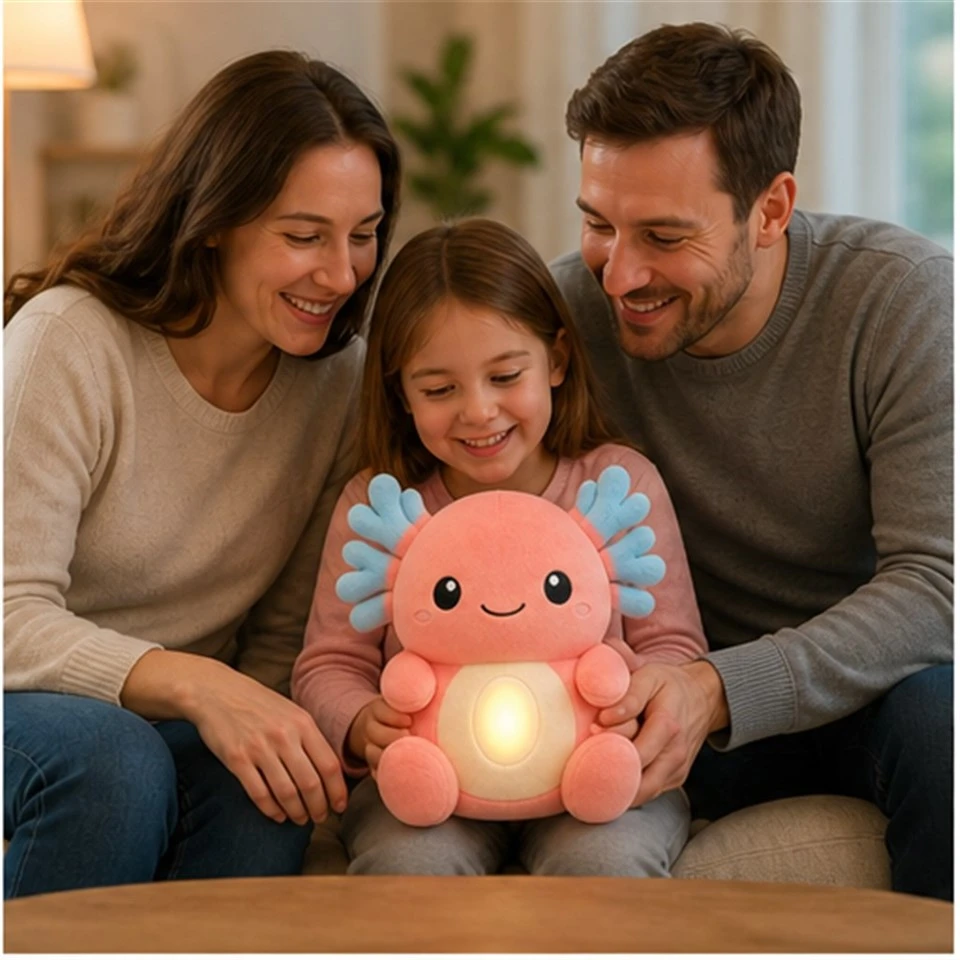
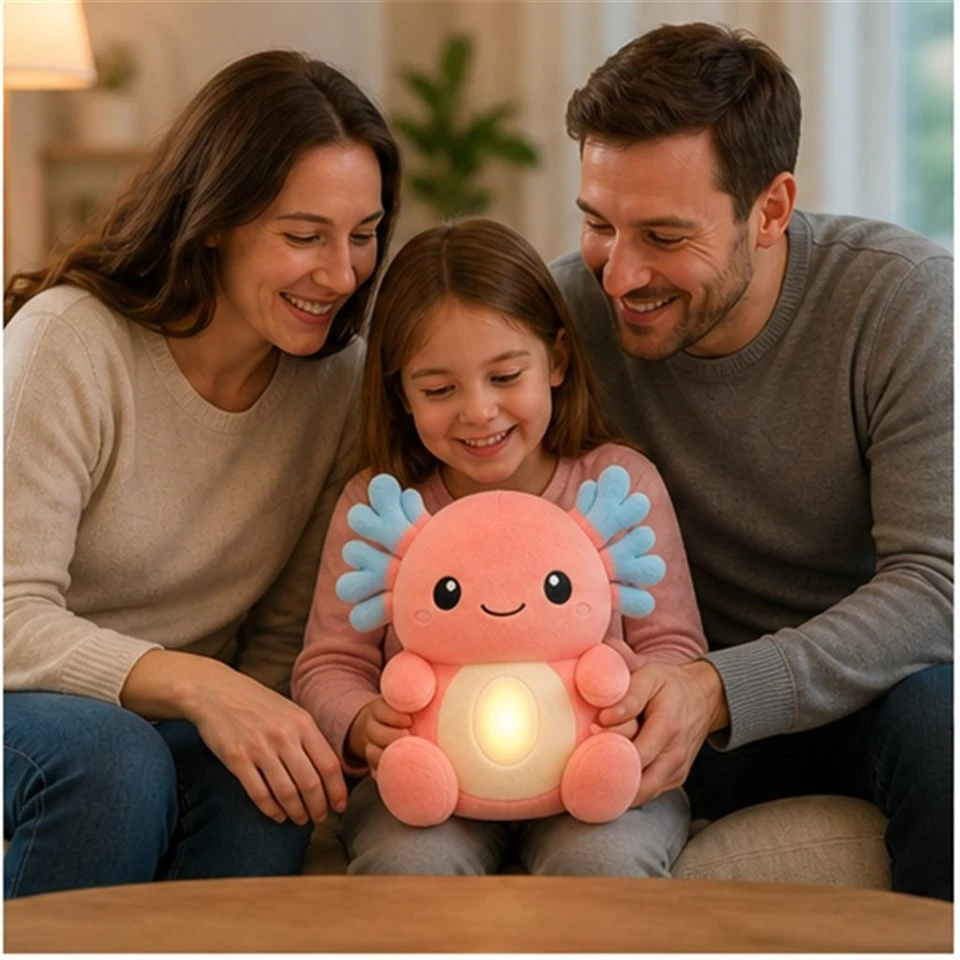
The lifestyle artwork places the coral figure between family members indoors. It gives a companion plush proposal a setting for discussing the intended activity. It is an illustration rather than evidence of a customer trial, age recommendation or outcome. Choose an activity the next sample can show, from a simple character story to a defined audio response.
A quiet gift edition can carry the character through printed artwork and packaging. A recorded response adds content and a trigger that need approval. A conversational proposal brings a different scope and should be described in terms of the intended exchange and the responsibilities that go with it. A single lifestyle image can illustrate several ideas, so record the chosen one separately.
Joy's visual project updates provide general context for this kind of design work. The proposed Coral Axolotl edition needs its own physical evidence. Bring the intended channel, the selected artwork and a short description of the first use to the review. The team can then decide whether the next deliverable is a sewn appearance sample or an integrated functional prototype.
Give the light and sound a sample brief
The feature board places sound and power symbols around the axolotl and illustrates a glowing belly. For interactive axolotl plush development, convert each selected effect into a behavior that can be shown. A working sample should make the control, response and end state clear. The artwork does not verify charging, runtime, loudness or light performance.

Consider the light from the front and from the same angle used for the hero image. The intended shape is a soft oval within a cream panel. A real assembly may produce a sharper edge, an uneven patch or a different appearance with the light off. The optical and textile proposals can be reviewed together once the actual structure is available.
Define the scope of a quotation around the relevant deliverables. The plush pattern, appearance sample, optional electronics, audio content and packaging can be discussed as separate pieces of work. That separation lets the buyer see which decisions remain open and compare proposals on the same basis. It also gives the design team a way to keep the face, gills and tail recognizable as the internal configuration changes.
The artwork and the sample belong in one brief
Select the front, side and rear references that define the edition. Mark the blue gill orientation, cream belly outline and tail position, then state whether an interactive feature is included in the next prototype. A shared reference reduces ambiguity when a buyer and maker discuss the appearance from different angles.
Send Joy the intended market, approximate size, target presentation and sample scope. Include artwork and content rights where applicable. WhatsApp +86 13691793052 or email xdt05@dtdianzi.com.
FAQ
Q: Can the blue gills change color or shape?
A: Yes, that can be discussed as a design revision. Keep the relationship between the two fans and the face visible in the updated artwork, and review the chosen material on the sewn sample.
Q: Is the circular detail a working speaker?
A: The concept shows a circular side detail. A selected sound edition needs a defined output arrangement and a functioning plush assembly before performance can be described.
Q: Are the illustrated dimensions final?
A: They describe a proposed envelope. Confirm measurement landmarks on the selected physical sample, including whether the outer gills and rearward tail are included.
Hot Tags: coral axolotl plush oem with blue gill fronds, China, suppliers, manufacturers, factory, customized, wholesale, bulk, quotation, made in China


