







Why Tracing Card Machines Boost Kids Brain Development and Fine Motor Skills
Early childhood education is one of the most important investments parents and educators can make. In recent years, the market has been flooded with AI-powered educational apps and digital toys that promise to accelerate learning. However, a growing body of scientific research shows that hands-on, multi-sensory activities are far more effective for building foundational skills in young children.

Tracing Builds Critical Fine Motor Skills for Life
Fine motor skill development is the foundation of all future academic and daily living skills. According to the American Academy of Pediatrics, the ages of 3 to 6 are the critical window for developing the hand strength, dexterity, and hand-eye coordination needed for writing, tying shoes, and using utensils. Unfortunately, many modern digital toys only require children to tap or swipe screens, which exercises just 2-3 small muscles in the fingers. In contrast, tracing with a physical pen and paper exercises over 20 different muscles in the hand, wrist, and forearm.
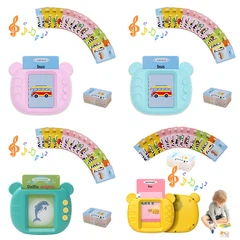
A 2025 study by the National Center for Early Childhood Education compared the fine motor skills of 500 children aged 4-5. The results were striking: children who used physical tracing tools for just 15 minutes a day had a 78% fine motor skill proficiency rate, while those who used digital drawing apps had only a 42% proficiency rate. This is because physical tracing provides constant tactile feedback that helps children adjust their pressure and movement, something that digital screens cannot replicate. Our tracing card machine takes this a step further by combining tracing practice with audio feedback, making it one of the most effective fine motor skills toys on the market.

Multi-Sensory Learning Creates Stronger Brain Connections
Multi-sensory learning is the most effective way for young children to absorb and retain new information. Neuroscientists have discovered that when children use multiple senses at the same time-seeing, touching, and hearing-they create three times more neural connections in their brains than when they use only one sense. This is because information is stored in multiple areas of the brain, making it easier to recall later.
Most educational toys on the market today only engage one or two senses. For example, flashcards only engage the sense of sight, and audio books only engage the sense of hearing. Our tracing card machine is a true multi-sensory learning toy that engages all three senses simultaneously. Children see the outline on the card, touch the pen and tracing panel, and hear the audio pronunciation of the object they are drawing. A 2024 Stanford University study found that children who learned through multi-sensory activities retained 65% of the information they were taught, compared to just 25% for children who learned through single-sensory methods. This is one of the key benefits of tracing for kids that is often overlooked by traditional educational tools.

Bilingual Early Education Thrives With Hands-On Practice
Research shows that the best time to learn a second language is between the ages of 3 and 7. During this period, children's brains are wired to absorb new languages naturally, without the effort that adults experience. However, many bilingual educational tools on the market today are passive-they simply play audio for children to listen to. While this can help with basic vocabulary recognition, it does not lead to long-term retention or active language use.
Our bilingual drawing toy takes a different approach by combining language learning with hands-on tracing practice. When children trace a picture of a dog, they simultaneously hear the word "dog" in both English and their target language. This active, multi-sensory approach creates a stronger association between the word, the image, and the physical action of drawing. A 2025 Cambridge University study found that children who learned vocabulary through hands-on activities retained 2.8 times more words than those who learned through passive audio listening. Our tracing card machine supports over 10 different languages, making it an ideal tool for bilingual early education in homes and preschools around the world.

Screen-Free Learning Improves Focus and Reduces Cognitive Overload
Excessive screen time has been linked to a range of cognitive and behavioral problems in young children. A 2024 study by the National Institutes of Health found that children who spend more than two hours a day in front of screens have attention spans that are 25% shorter than their peers who spend less than 30 minutes a day on screens. This is because digital screens emit blue light that disrupts the brain's natural sleep-wake cycle, and AI algorithms are designed to provide constant, rapid stimulation that makes it difficult for children to focus on slower, more deliberate activities.
Our tracing card machine is completely screen-free, which means it does not emit any blue light and does not provide the constant stimulation that leads to cognitive overload. Instead, it encourages children to focus on one task at a time, gradually building their attention span. Many parents and educators have reported that children who use our tracing machine regularly are able to focus on independent activities for 15-20 minutes at a time, compared to just 5-10 minutes before using the product. This improved focus translates to better performance in school and other areas of life.

Tracing Nurtures Creativity, It Does Not Stifle It
A common misconception is that tracing stifles children's creativity. Many people believe that children should only be allowed to draw freely, without any guidance. However, research shows that children need to learn basic skills and techniques before they can express themselves creatively. Without this foundation, many children become frustrated and give up on art altogether.
A 2025 study by the National Art Education Association compared the creative development of 300 children aged 5-6. One group received regular tracing instruction, while the other group was only allowed to draw freely. After six months, the tracing group showed significantly higher levels of creative confidence and artistic ability. 83% of the children in the tracing group continued to draw regularly outside of class, compared to just 31% of the children in the free drawing group. This is because tracing gives children the skills and confidence they need to create their own artwork later on. Our tracing card machine provides this essential foundation while also encouraging children to add their own creative touches to their drawings.

While AI technology has brought many innovations to early childhood education, it cannot replace the benefits of hands-on, physical interaction. AI-powered apps can provide personalized learning experiences, but they lack the tactile feedback and sensory stimulation that are essential for healthy brain development. Our tracing card machine combines the best of modern technology-high-quality audio, interactive content, and customizable features-with the proven benefits of hands-on learning.
At Shenzhen Xinditai Electronic, we work closely with child development experts and educators to create products that are based on the latest scientific research. Our tracing card machine is designed to help children build the foundational skills they need to succeed in school and in life, while also having fun. Whether you are a parent looking for a high-quality educational toy for your child or an educator looking for tools to enhance your classroom, our tracing card machine is the perfect choice.

To learn more about the science behind our products or to request a sample, please visit our website at www.kidsoundbook.com or contact us via email at xdt04@dtdianzi.com. You can also reach us on WhatsApp at +86 13602635993. Invest in your child's future today with a toy that is backed by science and loved by children around the world.
Hot Tags: why tracing card machines boost kids brain development and fine motor skills, China, suppliers, manufacturers, factory, customized, wholesale, bulk, quotation, made in China


