


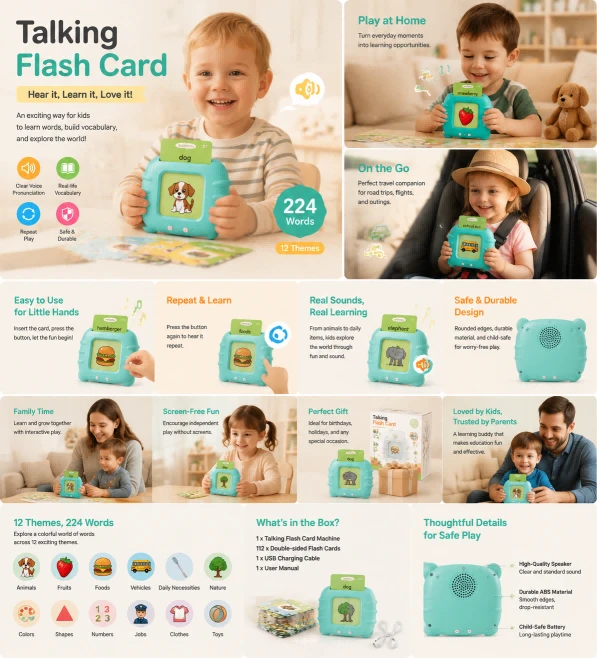
Sarah, a mother of two in Malaysia, was running out of ideas. Her four-year-old son had stopped responding to paper flashcards after week two. Her six-year-old daughter needed English support for school but resisted tutoring sessions. What Sarah needed was a tool that made learning feel like play - and did not require her to be the one doing the teaching.
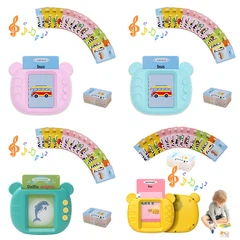
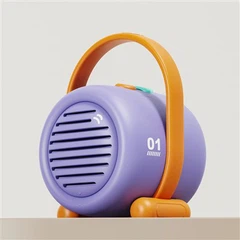
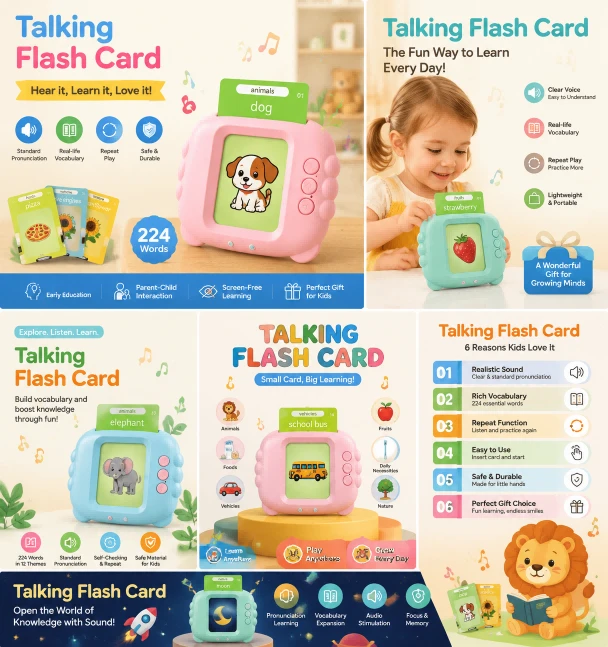
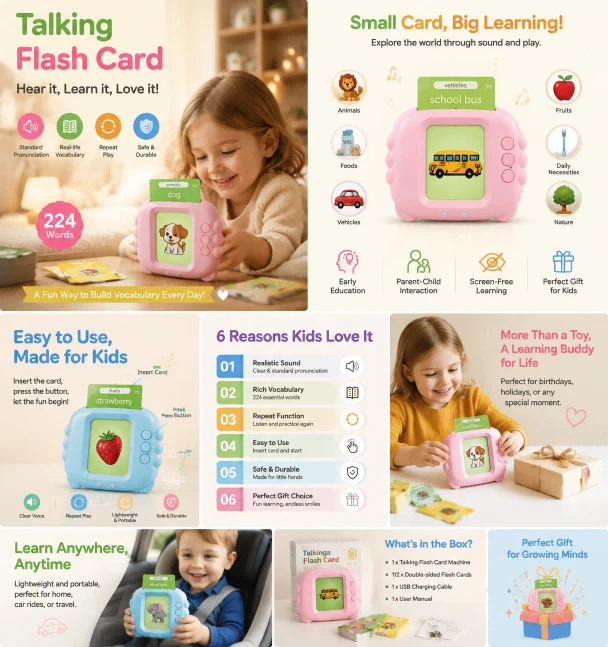
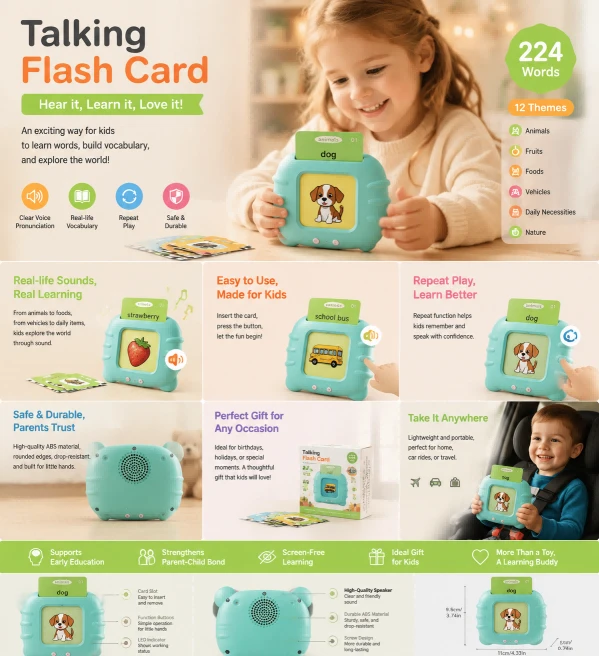
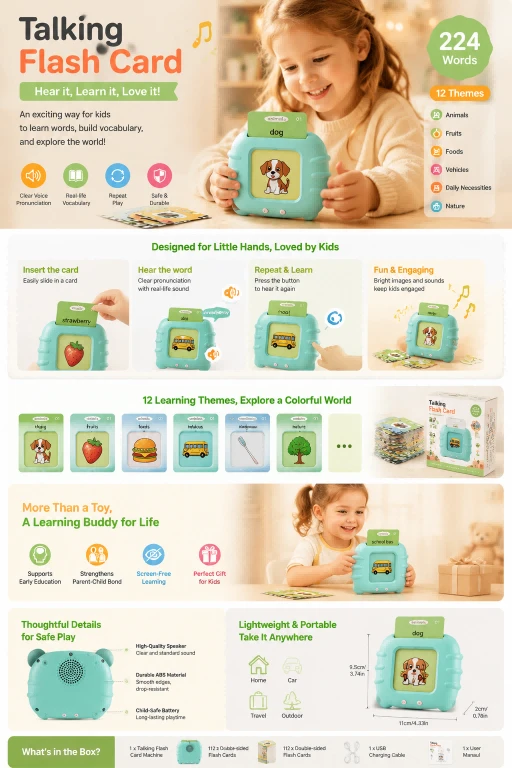
She discovered a solution in a simple, screen-free device about the size of her palm. Her children insert a card, hear the word spoken aloud, then repeat it back. No apps. No WiFi. No batteries to replace. Within days, both children were voluntarily picking it up during their free time - the four-year-old working through animal names, the six-year-old practicing English vocabulary independently.
This scenario is playing out in thousands of homes and classrooms globally. The challenge is universal: parents and educators need affordable, self-directed learning tools that capture attention without screens. And the solution is increasingly a single, well-designed audio flash card reader.
Dr. James Whitfield, an early childhood education specialist at the University of Melbourne, observes: "The most effective learning tools for young children share three traits - they are tactile, they give immediate feedback, and the child controls the pace. Audio card readers deliver all three." He adds that according to a 2024 meta-analysis published in Early Childhood Research Quarterly, self-paced audio learning devices improve word recall by an average of 47% over teacher-led group instruction in children aged three to seven.

What Daily Struggles Does This Learning Tool Address?
The following table maps specific real-world pain points to the practical solutions this device provides - without requiring parents to change their routines or invest hours of time.
| Real-World Challenge | What Parents and Teachers Face | How the Audio Card Reader Helps |
|---|---|---|
| Child refuses structured learning | Forcing flashcards or worksheets creates resistance | Self-directed play - child chooses when and which cards to explore |
| Limited English exposure at home | Non-native families struggle to provide correct pronunciation | Clear native-level audio for every word, repeatable at the touch of a button |
| Classroom with mixed ability levels | One teacher cannot simultaneously support advanced and struggling students | Each child works at their own speed without pressure or comparison |
| Screen time guilt | Parents worry about tablet and phone addiction | Tactile, screen-free interaction with no blue light, no autoplay, no ads |
| Speech therapy homework compliance | Children resist repetitive drills prescribed by therapists | Game-like card system with immediate positive audio feedback encourages repetition |
A 2025 observational study by the International Child Development Research Network found that children who used screen-free audio learning tools averaged 22 minutes of daily self-directed learning, compared to just 8 minutes for structured worksheet-based activities. The key driver was autonomy - when children felt in control of the activity, engagement time nearly tripled.

How Does This Help Parents with Speech Development Concerns?
For parents navigating speech delays, the audio flash card reader removes two major barriers: parental fatigue and inconsistent pronunciation. A speech therapist may recommend 50 repetitions of the word "cup" per session. Few parents have the stamina for that. The device does not tire.
The repeat function allows a child to hear a single word thirty times without any change in tone or speed. This consistency is critical for phonological development - a 2023 report from the American Speech-Language-Hearing Association highlighted that consistent, neutral pronunciation exposure is one of the highest-correlated factors in early speech intervention success.
Moreover, the device's customizable card system means parents or therapists can create personalized card sets targeting specific phonemes or vocabulary categories - for example, all /b/ sound words for a child working on bilabial articulation.
Ling, a speech-language pathologist in Kuala Lumpur, uses the device in her practice: "I have seen children who refused to participate in traditional card drills become fully engaged within days of switching to this audio system. The novelty of inserting a card and hearing a voice keeps them curious. The learning becomes incidental - they are not 'doing speech therapy,' they are playing a game that happens to be speech therapy."

Can This Device Replace Screen Time at Home?
Many parents are actively looking for screen alternatives. A 2024 survey by the Screen-Free Childhood Alliance reported that 82% of parents with children under eight are concerned about the amount of screen time in their household, yet 67% said they lacked engaging non-digital alternatives.
This audio card reader fills that gap. It sits somewhere between a traditional toy and an educational tool - engaging enough to hold a child's attention, educational enough that parents feel good about offering it, and simple enough that a three-year-old can operate it independently after one demonstration.
How Practical Is It for Day-to-Day Use?
Parents consistently highlight three practical benefits that make the device part of their daily routine. First, it is genuinely portable - small enough to toss into a diaper bag or glove compartment without thinking about it. Second, the battery lasts through multiple days of typical use without requiring daily charging. Third, the lack of connectivity means no setup, no passwords, and no content moderation concerns.
FAQ
Q1: How do I get my child to use it if they lose interest quickly? A1: Start with the theme most interesting to your child - animals and vehicles are usually the most engaging. Let them explore freely without any pressure to "learn." The audio feedback is rewarding enough to keep most children curious.
Q2: Can siblings use the same device with different cards? A2: Yes. The card sets can be swapped freely. A younger child can use the animal cards while an older sibling uses more advanced vocabulary themes. No profiles or settings changes are needed.
Q3: Is the audio clear enough for children with hearing difficulties? A3: The device features an upgraded speaker that delivers clear, distortion-free audio at adjustable volume levels. For children with mild hearing differences, the repeat function allows them to hear each word as many times as needed.
Q4: Will my child get bored of it after a week? A4: The 14 learning themes provide variety, and the novelty of inserting cards and hearing audio tends to hold interest longer than passive toys. Many parents report their children returning to it consistently over months, especially as they master one theme and move to the next.
Q5: Can grandparents or babysitters use it easily? A5: Yes. The three-button interface (power, repeat, volume) is intuitive enough for any adult to operate without instruction. Hand them the device and a card set, and they are ready.
Q6: Is there any risk of the device breaking if dropped? A6: The housing is made from impact-resistant material and the card slot has no delicate components. The device has been tested to withstand typical drops by children aged three and up.
Q7: Can I use it during meals or in the car? A7: Yes. The device is compact and screen-free, making it suitable for restaurants, car rides, waiting rooms, and other on-the-go situations where screens may not be ideal.
Q8: Do I need to supervise my child while using it? A8: Minimal supervision is needed. The device has no internet access, no in-app purchases, and no content beyond the card sets you provide. It is designed for independent play.

Contact us for OEM/ODM inquiries, bulk pricing, and customization details.
📧 happy@xinditai.com
📞 +86-138-2434-3309
🌐 www.kidsoundbook.com
🏢 SHENZHEN XINDITAI ELECTRONIC CO., LTD
Hot Tags: talking flash cards kids early education speech therapy autism toy custom cards multilingual classroom bedtime interactive gifts, China, suppliers, manufacturers, factory, customized, wholesale, bulk, quotation, made in China


