

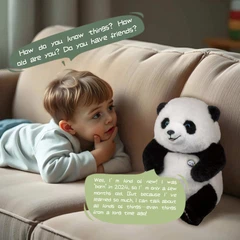
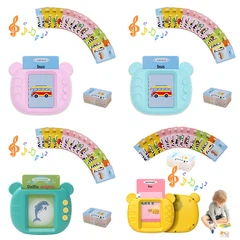
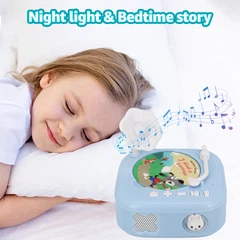
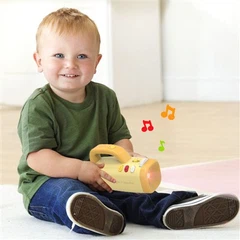
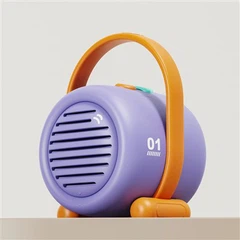
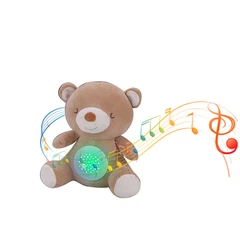
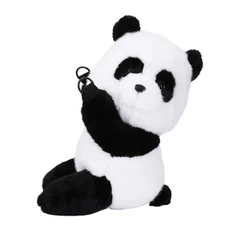
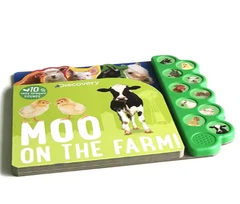
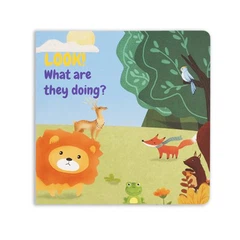
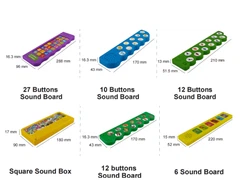
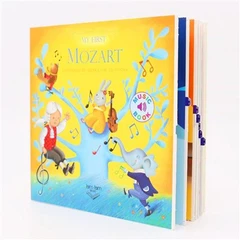
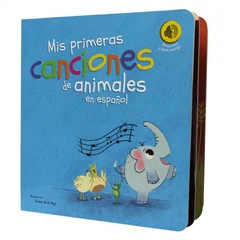


The Ultimate Guide to Custom RFID/NFC Children's Storyboxes: Screen-Free Audio Learning for the Next GenerationThe Power of Storytelling in Early Childhood Development

In an age where screens dominate children's attention, the humble storytelling device has emerged as a powerful tool for cognitive development, language acquisition, and imaginative play. The RFID/NFC children's storybox represents the perfect fusion of tactile interaction and digital audio-a "phygital" solution that engages young minds without exposing them to blue light or addictive algorithms .
Research consistently shows that listening to stories strengthens neural pathways, builds vocabulary, and develops emotional intelligence in ways that passive screen viewing cannot replicate . When children physically interact with story characters-placing them on a reader to trigger audio-they create multisensory learning experiences that enhance memory retention and comprehension .
Today, we're introducing a fully customizable RFID/NFC storybox platform that empowers brands, educators, and content creators to bring their characters and stories to life through screen-free, interactive audio technology.
| NFC/RFID STORY Box | |
| Customize App | welcomed |
| Customize langauge | welcomed |
| Certifications | CE&ROHS&EN 71 past |
| Material | Safety ABS+Silicone+electronics |
What is NFC Technology? The Official Standard
Definition and Governing Body
Near Field Communication (NFC) is a short-range wireless communication standard maintained and promoted by the NFC Forum , a global industry association founded in 2004 by leading technology companies including Nokia, Philips, and Sony. Today, the NFC Forum comprises over 400 members who collaborate to ensure interoperability, security, and innovation across NFC-enabled devices worldwide .
The NFC Forum's mission is to advance the use of NFC technology by developing specifications, ensuring interoperability, and educating the market about its capabilities . This standardization ensures that an NFC tag from one manufacturer will work seamlessly with an NFC reader from another-critical for products like storyboxes that may use tags from multiple sources.
Technical Specifications
| Parameter | Specification |
|---|---|
| Operating Frequency | 13.56 MHz (globally license-free) |
| Typical Communication Distance | Less than 10 cm (4 inches) |
| Data Transfer Rate | 106 kbit/s, 212 kbit/s, or 424 kbit/s |
| Communication Modes | Reader/Writer, Peer-to-Peer, Card Emulation |
| Standards Compliance | ISO/IEC 18092, ISO/IEC 14443, FeliCa |
The Critical Importance of "Near Field"
The defining characteristic of NFC is its extremely short operational range. Unlike Bluetooth or Wi-Fi that can communicate across rooms, NFC requires devices to be within 10 centimeters (about 4 inches) -and in practice, typically much closer.
This "near field" property is not a limitation; it's a deliberate safety and security feature:
Intentional Activation: A child must deliberately place a figure or card on the reader-no accidental triggers from across the room
Secure Communication: Signals cannot be intercepted from a distance, protecting content and preventing unauthorized access
No Interference: Multiple storyboxes can operate in the same room without cross-talk or confusion
Battery Efficiency: Short-range communication requires minimal power, extending battery life
For parents, this means peace of mind. For children, it means a toy that responds exactly when and how they expect.
How does the NFC story box work ?
Core System Architecture
A typical NFC-enabled storybox consists of three primary components working in harmony:
1. NFC Reader Module
The reader is the "brain" of the interaction. Common implementations use chips like the PN532-a highly integrated transmission module for contactless communication at 13.56 MHz. The PN532 and similar chips handle:
Carrier generation to power passive NFC tags
Signal modulation and demodulation for data exchange
Anti-collision to handle multiple tags in the field
Error detection and correction for reliable communication
2. Audio Playback System
Once the NFC reader identifies which figure or card is present, it triggers the audio system:
Microcontroller processes the tag ID and retrieves the corresponding file path
Audio decoder converts compressed audio (MP3, AAC, WAV) into analog signals
Amplifier boosts the signal to drive the speaker at child-safe volumes
Speaker delivers rich, clear sound suitable for storytelling
3. Storage Unit
Content must live somewhere. Storyboxes typically offer multiple storage options:
Internal Flash Memory: 8GB to 32GB of onboard storage for offline playback
MicroSD Card Slot: Expandable storage for content libraries
Cloud Integration: Wi-Fi connectivity for streaming and downloads
The Interaction Sequence: What Happens When a Child Places a Card
Let's walk through the magical moment step by step:
Step 1: Approach
A child picks up an NFC-enabled figure or card and brings it within 10 cm of the storybox reader.
Step 2: Power Transfer
The reader generates a magnetic field that induces a current in the passive NFC tag embedded in the figure. This momentary power is enough to activate the tag's microchip.
Step 3: Identification
The tag transmits its unique identifier (UID) back to the reader. This UID is a serial number programmed during manufacturing-think of it as the figure's fingerprint.
Step 4: Lookup
The storybox's microcontroller receives the UID and checks its internal mapping database: "Which audio file is associated with this specific figure?"
Step 5: Retrieval
The system locates the corresponding audio file-either in internal storage, on a memory card, or by initiating a cloud download via Wi-Fi.
Step 6: Playback
The audio decoder processes the file and sends it to the amplifier and speaker. The story begins, typically within 0.5 to 1.5 seconds of the figure touching the reader.
Step 7: Continuous Reading
The NFC reader continues to poll for the tag's presence. If the child removes the figure, playback may pause or stop, depending on the programmed behavior.

NFC vs. RFID: Understanding the Difference

While often mentioned together, NFC and RFID are not the same technology. Understanding the distinction is crucial for product development and content strategy.
RFID (Radio Frequency Identification)
Primary Function: Identification and tracking
Communication: Typically one-way (tag to reader)
Frequency Ranges: LF (125 kHz), HF (13.56 MHz), UHF (860-960 MHz)
Range: Varies from centimeters to meters depending on frequency
Data Capacity: Usually just a unique identifier
Read/Write: Generally read-only for passive tags
NFC (Near Field Communication)
Primary Function: Interactive data exchange
Communication: Two-way (both devices can send and receive)
Frequency: Fixed at 13.56 MHz only
Range: Always under 10 cm (intentional limitation)
Data Capacity: Up to 8 KB or more
Read/Write: Full read-write capability standard
Why NFC Wins for Storyboxes
The bidirectional communication capability of NFC is what transforms a simple identification system into an interactive platform:
| Feature | RFID (Traditional) | NFC (Advanced) |
|---|---|---|
| Play Pre-recorded Stories | ✅ Yes | ✅ Yes |
| Parent Customization | ❌ No | ✅ Yes |
| User-Created Content | ❌ No | ✅ Yes |
| Progress Tracking | ❌ No | ✅ Yes |
| Interactive Games | ❌ No | ✅ Yes |
| Content Updates via Figures | ❌ No | ✅ Yes |
The Customization Advantage
Because NFC supports data writing as well as reading, parents can:
Purchase blank NFC figures or cards
Use a companion app to record their own voice reading a story
Write that audio file to the NFC tag (or store it on the device and link the tag ID)
Place the figure on the box and hear Grandma's voice reading a bedtime story
This turns the storybox from a playback device into a creation platform-one that captures family memories and personalized content in a way traditional RFID cannot.
4. Core Components Deep Dive: The PN532 and Beyond
The PN532 NFC Module
The PN532 is one of the most popular NFC controller chips in consumer products, including storyboxes. Developed by NXP Semiconductors, it offers:
Integrated NFC functionality supporting all three operating modes (reader/writer, peer-to-peer, card emulation)
Low power consumption ideal for battery-operated devices
Multiple host interfaces (I²C, SPI, HSU) for flexible integration
Embedded firmware handling all NFC protocol details
Support for multiple tag types including Mifare, FeliCa, and NFC Forum tags
Alternative NFC Solutions
Depending on product requirements, manufacturers may choose:
ST25R Series (STMicroelectronics): High RF output for challenging industrial designs
MFRC522 (NXP): Cost-effective for basic read-only applications
Custom ASICs for ultra-high-volume products
Audio Processing Components
Beyond NFC, the storybox requires capable audio hardware:
Audio Decoder IC: Converts compressed audio to analog signals
Class D Amplifier: Efficient power use with minimal heat generation
Speaker Selection: Full-range drivers optimized for voice clarity
Passive Radiators: Enhance bass response in compact enclosures
Power Management
Children's products demand intelligent power systems:
Lithium Battery Protection: Overcharge, over-discharge, and short-circuit protection
Low Quiescent Current: Minimal power drain when idle
Fuel Gauge: Accurate battery level reporting
USB Charging: Standard USB-C connectivity with fast charging
5. Memory and Storage: Where Stories Live
On-Device Storage
Internal flash memory is the primary storage for offline playback:
| Capacity | Audio Hours (128kbps MP3) | Typical Use |
|---|---|---|
| 8GB | ~140 hours | Entry-level, 10-20 figures |
| 16GB | ~280 hours | Mid-range, 20-40 figures |
| 32GB | ~560 hours | Premium, 40-80+ figures |
Cloud Integration
Wi-Fi connectivity enables:
Content Streaming: Direct playback without downloads
Background Downloads: New stories arrive automatically
Library Management: Parent purchases from anywhere
Multi-Device Sync: Same content across multiple storyboxes
USB Transfer
For families without Wi-Fi or privacy-conscious parents:
Drag-and-drop simplicity: Connect to computer, copy files
No account required: Complete privacy control
Bulk loading: Perfect for classrooms and libraries

The Perfect Fusion of Physical and Digital
NFC technology transforms simple stuffed animals and printed cards into interactive learning companions. By maintaining the tactile satisfaction of physical play while adding the depth of digital audio, NFC storyboxes offer something precious in today's screen-saturated world: engagement without addiction, learning without pressure, and magic without mystery.
The near-field nature of NFC ensures safety and intentionality. The read-write capability enables personalization and creativity. The global standards guarantee reliability and interoperability.
When you choose the Tinex platform for your custom NFC storybox, you're not just buying manufacturing-you're partnering with engineers who understand the technology at its deepest level, from antenna design to firmware optimization, from mold engineering to international certification.
Ready to bring your characters to life through the magic of NFC? Contact our team today to discuss your custom storybox project.


Hot Tags: custom rfid/nfc children's storyboxes: screen-free audio learning for the next generation, China, suppliers, manufacturers, factory, customized, wholesale, bulk, quotation, made in China


