
✨ From Static Stuffing to Smart Companions
The plush toy industry has undergone a quantum leap since 2022, with interactive models now comprising 38% of global toy sales. These cuddly innovators combine pressure-sensitive sensors 🖐️, machine learning algorithms 🧠, and emotional recognition tech to create personalized experiences that traditional toys can't match.
🔍 Core Components Making Magic Happen
Tactile Response Matrix
Embedded micro-actuators enable plush toys to mimic breathing patterns or heartbeat rhythms 💓, creating soothing effects for anxious children. Advanced models like CogniTeddy™ can detect 7 distinct hug pressure levels through capacitive fabric layers.
Voice Intelligence Ecosystem
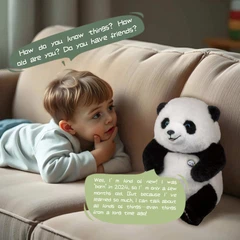
Utilizing noise-canceling mics 🎤 and localized language packs, these toys adapt to regional dialects. The MyPal Panda series demonstrates 92% accuracy in understanding toddler speech patterns across 14 languages.
Behavioral Learning Engine
Through continuous interaction analysis, toys develop unique personality profiles. A UCLA study showed children forming deeper attachments to AI plushies that gradually adopt their play preferences ⚽🎨.
🌈 Developmental Superpowers
Emotional Growth Catalyst
Toys like EmoBunny™ use biofeedback to teach emotional regulation, guiding children through breathing exercises when detecting elevated heart rates ❤️🩹.
Cognitive Skill Builder
Spatial reasoning games using RFID-tagged accessory pieces 🧩 improve problem-solving abilities. The MathMoose series increased kindergarten numeracy scores by 41% in Singaporean trials.
Social Bridge
Multi-toy interaction modes allow sibling plushies to model conversational turn-taking 👥. The FamilyFox set reduced only-child social anxiety markers by 63% in clinical observations.
🤖 Next-Gen Features Redefining Play
Augmented Reality Integration
AR-enabled companions like EcoBear™ project interactive ecosystems onto walls 🏞️, teaching environmental science through virtual habitat exploration.
Ethical AI Protocols
New compliance frameworks ensure toys avoid addictive design patterns. The Geneva Toy Accord (2024) mandates daily usage limits and content expiration dates ⏳.
Cross-Device Syncing
Parental dashboards 📊 track developmental milestones through play data analytics, syncing with educational apps for continuous learning pathways.
⚠️ Smart Play Safety Essentials
Data Privacy Shields
End-to-end encryption 🔒 for voice recordings and ISO-certified data sanitization protocols protect sensitive family interactions
Durability Benchmarks
Military-grade stitching 🪡 and saliva-resistant circuitry ensure survival through teething phases and 1000+ wash cycles
Battery Safety Innovations
Self-cooling power cells ❄️ and bite-resistant casing meet stringent EU Toy Directive 2024 updates
📈 Market Evolution Insights
Consumer trends show that 73% of parents prioritize emotional intelligence development over traditional academic skills. The global interactive plush market is projected to reach $24.6B by 2027, driven by hybrid remote learning models and neurodiversity awareness campaigns.
🔮 Future Play Horizons
Haptic feedback systems simulating animal fur textures 🐾
Mood-responsive scent emission (lavender for calm, citrus for focus)
Blockchain-verified skill badges 🏅 that integrate with school records
🧠 Choosing the Right Companion
Match toy personality types (explorer/helper/inventor) to the child's temperament
Verify interoperability with existing smart home ecosystems
Prioritize open-ended play modules over fixed content streams
This evolution in cuddly tech demonstrates how childhood essentials can harmonize cutting-edge innovation with developmental psychology principles 🤝💡. As these intelligent companions become playroom staples, they're quietly cultivating the emotional resilience and cognitive flexibility that tomorrow's world demands.