

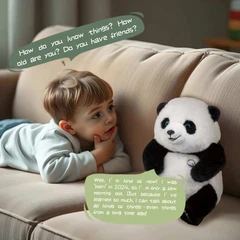
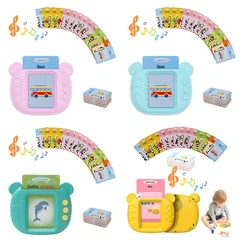
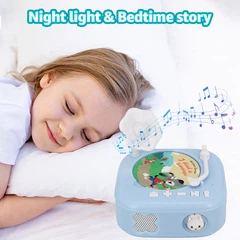
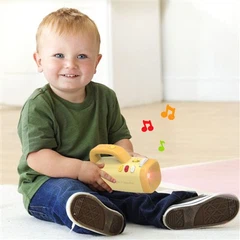



A recorded voice turns a plush figure into something a family keeps. The Castle Book Guardian accepts a custom recording that plays when the small book is touched, so a grandmother reading a bedtime passage, a parent singing two lines, or a couple exchanging a sentence can live inside a 13 cm object that sits on a shelf. The rest of the figure stays standard: hooded cape, embroidered crest, quilted cushion, warm cover light.
Gift plush competes on softness, size, and price, and a customer forgets all three within a month. A voice is the one element a recipient cannot get from another product in the category, and that difference decides whether the object stays on a shelf or in a drawer.

Why a Recorded Voice Outlasts a Printed Message
A card carries a message that a recipient reads once. A recording plays again when a hand touches the book, so the message returns without the recipient having to look for it, and repetition is what turns a gift into a habit of use.
The voice also carries information that text cannot. An accent, a laugh at the end of a sentence, and the pace of a familiar speaker are what a family recognises, and a printed line loses all three.
Timing matters in the other direction too. A recording captures a person at a particular age, which is why grandparents and new parents are the two groups who commission this work most often.
What the Recording Sits Inside
The electronics hide inside the padded base rather than inside the plush body. An enclosed smart module sits low in the base and holds the weight down while the voice stays clear, and the fabric of the book carries the light layer over it.
That placement protects the recording. A module that does not compress with a hug lasts longer than one sewn into a squashed belly, and a figure that is never squeezed hard keeps its playback quality through years of handling.
The touch surface is the book cover, not a hidden button. A child presses a book because a book is something to press, and an interface that matches the object removes the instruction sheet.

Customisation Layers and What Each One Returns
|
Layer |
Standard Build |
Custom Build |
What the Recipient Gets |
|
Voice content |
Demo story set |
A family recording |
A familiar voice inside a small object |
|
Crest |
Castle tower emblem |
A family or brand crest |
Personal heraldry on the cape and hood |
|
Colour |
Coffee brown, cream beige, gold |
A matched fabric palette |
A figure that fits the room or the memory |
|
Book cover |
Castle motif in gold thread |
A name, a date, or a symbol |
A cover that belongs to one person |
|
Packaging |
Plain shipper |
Printed sleeve with a card |
A gift that arrives ready to hand over |
Capturing a Recording That Sounds Right
Most families record on a phone, and the result is usually usable. A quiet room, a phone held a hand's width from the mouth, and a single unbroken take produce cleaner audio than a rehearsed second attempt, because the hesitation in a first take is what makes a voice sound real.
Length matters. Thirty to sixty seconds suits a passage, a greeting, or a message, while a longer track is better split across several stories than compressed into one.
The factory handles the rest. Files are encoded, checked against the light trigger, and played back on a completed unit before the box is sealed, so a voice that arrives distorted is caught at the sample stage rather than at the customer's door.

Colour as a Keepsake Signal
Three standard finishes carry three different messages. Coffee brown reads as antique and suits a heritage theme, cream beige reads as warm and neutral, and gold reads as celebratory, which lets a buyer stock one body and address three gifting occasions.
A custom palette extends the range without new tooling. Fabric colour sits in the material specification, so a memorial figure can match a family's preference while a brand program matches a house style.
Timing, Volume, and Packaging
A program starts with the audio, since every stage after it hangs on that decision. Once the recording is approved, the light trigger is timed against the voice, the crest artwork is finalised, and a sample confirms the two together. A figure whose light arrives before the voice, or after it, feels mechanical, so the pairing belongs in the specification.
Volume starts at 600 units for one finish, and a paid sample covers a single-unit order. Approving the sample protects the date the gift must arrive, which matters most for a birthday, an anniversary, or a memorial, where a late delivery loses the moment entirely.
Compliance files follow the destination market, and a program should settle that question before the carton is printed rather than after the container is booked.

Frequently Asked Points
Recording length - Thirty to sixty seconds suits a message, a passage, or a greeting, and longer tracks can be split across tracks.
Where the sound comes from - An enclosed smart module sits inside the padded base, and the book cover carries the touch trigger.
File format - A phone recording in a standard audio format is sufficient, and the factory handles encoding.
Crest and cover - The cape crest and the book cover can both carry a custom mark, name, or date.
Colours - Three finishes ship as standard, and a custom fabric match can be quoted.
Volume - One finish starts at 600 units, and a one-off gift can be produced as a paid sample.

Contact
For OEM and ODM programs covering custom colours, story and recording content, packaging, and shelf-ready cartons, contact SHENZHEN XINDITAI ELECTRONIC CO., LTD at happy@xinditai.com, +86-138-2434-3309 (WhatsApp and WeChat), or visit www.kidsoundbook.com.
Hot Tags: record a grandmother's voice and sew it into a book, China, suppliers, manufacturers, factory, customized, wholesale, bulk, quotation, made in China


