






Kids Phonograph Card Player – A Year of Selling Windows, and How Far Ahead Each One Has to Be Planned
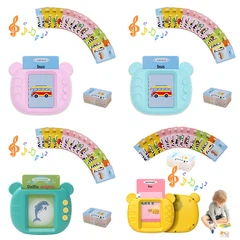
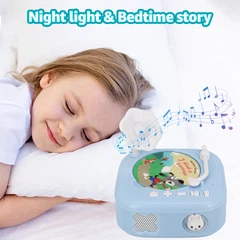
Details: The Kids Phonograph Card Player is a 116 × 103 × 110 mm audio toy that plays a story when a card is seated and the side lever is turned. Sixty story cards come with it – fifty in English, ten in Chinese, both replaceable – and the tale continues as a soft night light comes up, which is what turns it from a plaything into part of a bedtime routine. It weighs 440 g, runs from a 200 mAh cell recharged over Type-C, and ships thirty to a carton at 15 kg gross. What makes it a planning product rather than an impulse one is that it sells in windows: gifting, back to school, spring, festive seasons, family occasions and summer travel each want a slightly different edition of the same machine. The deck and the box are what change, and both are decided months before the window opens. Runs begin at 1,000 pcs.
Why the Calendar Matters More Than the Catalogue
Most audio toys are bought when a household decides it wants one. This product is bought when a date approaches: a birthday, a holiday, the first week of a school term, a grandparent looking for something that is not another screen. That difference changes how a distributor should buy it. The question is no longer how many units to stock, but which edition has to be on the water for which date, and what has to be decided before that shipment can be booked.
The one resource that genuinely runs out is production time, not capacity. Every buyer in every market wants their stock to land shortly before the same handful of dates, so the slots closest to those dates fill first, and the buyer who confirms a deck and a box late pays for it either in freight or in shelf position. Working backwards from a retail date is a more useful habit than working forwards from a quotation, because the date is fixed and everything else is negotiable.
What makes the product forgiving is that an annual plan does not require an annual redesign. The machine stays as approved; a winter deck, a spring deck or a term-time deck is content and carton work. A distributor can therefore take one product through several peaks, changing only the story set and the outside of the box, and keep the reviews, the listing history and the shelf relationship that the first edition earned.
There is a quieter benefit too. Seasonal buying is what gives a shop a reason to reorder from the same supplier several times a year rather than once, and a supplier who can supply a festive edition, a school edition and a travel edition of one item is easier to keep than three suppliers who each do one thing. The calendar is not a marketing document; it is the shape of the commercial relationship.
Two decisions belong at the start of that plan rather than the end. Fix the language spread of the deck for the whole year, since a deck that changes language between windows fragments the stock; and decide the gift edition early, because box artwork is printed with the run rather than added to it. Everything else – quantities, splits between markets, restock timing – can move once a retail date is known.
Three dates carry the whole plan: the day the goods have to be on a shelf, the day they have to leave the factory, and the day the deck and the box have to be approved. Working back from the first is ordinary arithmetic, and it is why a buyer who knows their shelf date is easier to serve than one who knows only their price. The arithmetic usually shows the same thing – what sets the earliest possible shipment is the printing and the recording, not the assembly. The machine is a known build that has been through production before; a new edition has to be written, illustrated, recorded and proofed before a single carton can be packed.
Kids Phonograph Card Player – The Year in Facts (LMC 001)
| Kids Phonograph Card Player – Specification and Editions (LMC 001) | |
| Item | Kids Phonograph Card Player / LMC 001 |
| Story Playback | A card is seated and the side lever is turned; nothing to press, nothing to swipe, no screen |
| Card Deck | Sixty story cards as standard – fifty English, ten Chinese – with the card set fully replaceable |
| Night Light | A soft light designed to help a child settle, which is what carries the product into the bedtime routine |
| Editions | Decks and cartons built per selling window: gifting, term time, spring, festive, family and travel |
| Branding | Cards, story contents, logo and packaging all produced to the buyer's order |
| Power | 200 mAh lithium cell, recharged over Type-C |
| Body Size | 116 × 103 × 110 mm |
| Gift Carton | 200 × 155 × 80 mm, with artwork and copy set for each market |
| Unit Weight | 440 g |
| Export Carton | Thirty sets per carton – 42.5 × 41.5 × 48.5 cm |
| Carton Weight | 15 kg gross |
| Certification | CE, UKCA, FCC and RoHS files with CPC; EN71 and ASTM F963 reports issued when a market requires them |
| Minimum Order | 1,000 pcs per edition; a trial run between 200 and 500 units is possible |
Give us a retail date and we will come back with the plan that fits it: pricing steps, sample and trial terms, the card and carton templates for the edition, and the production slot the date requires. Send it through the enquiry form, or reach the export desk directly, and the answer arrives the next working day. Other audio and talking-card products are published at: https://www.kidsoundbook.com/products
Seven Selling Windows and What Each One Needs
Details: Each window below is a different buying reason attached to the same machine. The edition is what changes – the deck inside, the box outside, and the one message on the front of it.
The Year-End Gift Window
The heaviest window of the year, and the one where the box does the selling. A gift edition with a festive deck and a carton designed to be handed over as a present is what this season wants, and it is also where brand blocking on a shelf decides which of several similar toys a shopper picks up.
Back to School and Term Time
Institutions and parents buying in the same fortnight, for the same reason: routine. A term-time deck built around listening, vocabulary and settling down after school performs here, and multi-unit cartons matter more than gift packaging because the buyer is kitting out rooms rather than wrapping presents.
Spring and Easter
A lighter, lower-priced moment. Shops want an entry edition they can put in a basket rather than a hero gift, so the spring version usually keeps the standard carton, swaps in a short deck and relies on display rather than on a premium box.
Ramadan and Eid
A gifting season with a language requirement attached. The edition is chosen by language and by story content rather than by price, and the practical question is scheduling: the holiday moves every year, so the shipment date has to be set from the holiday rather than from the factory calendar.
Grandparents' and Family Occasions
The buyer here is not shopping for a toy; they are looking for something a child will keep. Classic tales in keepsake packaging suit this window, and it is the one where the night light earns its place in the message, because the grandparent is buying quiet evenings as much as stories.
Summer Travel
A compact unit that works without a network, needs no account and can be operated by a child in a car seat is what travel retail and holiday accommodation buyers order. The edition is about reliability rather than novelty: a slim deck, a sturdy carton, and nothing to configure on arrival.

The Following Year – Rotating the Deck
A festive deck sold well in December should not be the same festive deck next December. Because cards and cartons are produced per order, the second year brings a revised story set and a fresh box against the machine that was already approved and tested – the cheapest way there is to give a listed product a new season.
Six Buyers, and the Window Each One Buys For
The same machine reaches very different shelves, and each route has its own peak. Knowing which window a buyer is buying for tells you what to quote before they describe it.
What is worth noticing is that no two of these buyers peak in the same month. That is what allows one machine to carry a year rather than a season. A distributor serving two or three of these routes can smooth both cash flow and container planning, because the edition that is quiet through one channel is the edition in demand in another, and the same approved unit sits behind both.
The Planning Calendar – What Has to Be Ready
| Edition Planner – Kids Phonograph Card Player LMC 001 | ||
| Window | What Drives the Purchase | What Has to Be Ready |
| Year-end gifting | A present that feels substantial and needs no explaining | Gift box artwork, festive deck, premium carton approved |
| January reset | Households reorganising routines after the holidays | General deck back on the listing, stock already landed |
| Back to school | Term dates, group listening, morning and evening routines | Multi-unit cartons, term-time deck, teacher-facing box copy |
| Spring | A small treat rather than a milestone gift | Entry edition, standard carton, short deck, display plan |
| Ramadan and Eid | Family gifting in the household language | Localised deck wording, gift set packaging, shipment date set from the holiday |
| Family occasions | A gift from a grandparent that a child keeps | Classic-tale deck, keepsake packaging, night-light message |
| Summer travel | Long journeys and quiet afternoons away from home | Compact edition, sturdy carton, no-setup wording on the box |
One planning habit pays for itself across all seven windows: decide the year's editions in one conversation rather than one order at a time. A buyer who settles the festive deck, the term-time deck and the travel deck together is buying one machine in three configurations, which is a single approval, a single set of samples and a single relationship with the factory – instead of three separate projects that each begin from nothing.
Why a Standing Product Beats a New One Every Season
Seasonal selling does not have to mean seasonal products. Four consequences follow from keeping one machine and changing its editions, and each one shows up in the buyer's own figures.
| Side by Side – One Machine Across the Year Against a Single-Edition Toy | ||
| LMC 001 planned across twelve months | A one-edition seasonal toy / fixed-content player | |
| Number of selling windows | Several, each with its own edition | One, until the stock clears |
| What changes between windows | The deck, the box wording, the sleeve | Nothing; the same item has to carry the year |
| Cost of a new edition | Printing and recording only | A new product development cycle |
| Reviews and ranking | Carried forward from the first edition | Restarted with every new model |
| Leftover stock | Decks can be held or redeployed | Finished units written off after the season |
| Shelf presence | Refreshed twice or three times a year | Unchanged until the range is replaced |
| Language coverage | Deck produced per market | Whatever the factory decided |
Kept modest: this is a card-reading audio toy with sixty story cards, a lever, a soft night light and a 200 mAh battery, and its only claim to a planner's attention is that the content layer can be rebuilt for each selling window while the machine stays as approved.
Eight Stages From Retail Date to Sealed Carton
Work backwards from the date the stock has to be on a shelf and these stages fall into place. Started late, the same list becomes a series of compromises about freight and layout.
| Stage Plan – From Window Choice to Export Carton | ||
| Stage | What Gets Settled | Your Input |
| 1. Window and market | Which selling window the order serves, and in which countries | Retail date, destination markets |
| 2. Deck theme | Which stories make the sixty cards for this edition | Theme, title list or the band to follow |
| 3. Language spread | How the deck divides between languages for the year ahead | Language split and dialect preference |
| 4. Box edition | Standard carton or keepsake box, and what the front panel promises | Box artwork, logo, wording for the window |
| 5. Recording | Voice, pacing and level for the stories in this edition | Narrator brief, pronunciation notes |
| 6. Edition sample | Whether deck, box and unit work together when opened as one product | Approval of the assembled edition |
| 7. Volume and timing | How much of each edition, and which production slot the retail date needs | Quantities per market, delivery window |
| 8. Run and dispatch | Print, assembly, packing and the document set for each destination | Carton marks, document list, shipping terms |
Stage seven is where a well-planned year separates itself from a rushed one. Editions that share a machine can also share a production slot, so a buyer who ships a festive edition and a term-time edition from the same run often avoids the freight premium that comes with booking close to a peak. Deciding the year's editions together is what makes that possible.
One last piece of arithmetic belongs before the order is confirmed: how many editions can share a single production slot. Two editions confirmed together normally cost less in total than the same two booked separately and late, and the saving tends to appear in freight rather than in the unit price. That is the whole argument for planning a year of windows instead of placing a season at a time.
Planning Questions, Answered Without Sales Talk
Q1: How early do we need to commit to a year-end order?
Earlier than most buyers expect, and the reason is slots rather than capacity. Every distributor in every market wants goods landed shortly before the same handful of dates, so the production weeks closest to those dates are taken first. Give us your retail date and we will tell you the latest sensible commitment for it, and what would have to change if you commit later – which is usually freight rather than the product.
Q2: Can we take one edition now and add another later?
Yes, and it is how most first years run. A buyer normally starts with the edition that matches the next window, then adds a second one once the first has sold. Because a new edition is a deck and a carton rather than a new machine, the second order does not go through tooling, samples or a fresh type test – it is a production instruction on a product that has already been approved.
Q3: Does a new edition mean new certification?
The machine is unchanged, so the basis of the existing files still describes it, and the certificate set is refreshed with each batch rather than rebuilt from nothing. What does change per destination is the paperwork itself: a festive edition sold into the European Union and one sold into the United States need their own document sets, and both travel with the goods they describe.
Q4: How much of the deck has to change between editions?
As little as you like. Some buyers reshuffle a handful of cards and reprint the carton; others build a completely new set of sixty. What matters is that whichever cards carry over, the box wording matches what is actually inside, because the most common complaint in a multi-edition range is an outer carton describing a story that is not on any card in the box.
Q5: Can one order cover two editions and two markets?
It can, and it usually saves money, provided the editions are separated through packing rather than mixed. Each edition carries its own deck and its own carton wording, so a carton containing both creates a mismatch between the box and the contents. Tell us the split when the order is placed and the carton marking is printed to match, which is what lets a warehouse receive two editions without opening anything.
Q6: What happens to cards left over after a season?
Decks are small and light, so they can be held for the following year, folded into the next edition or replaced outright – far more forgiving than a warehouse full of finished machines in the wrong packaging. The decision belongs in the plan rather than in January: a buyer who knows which decks will repeat has an easier second season than one who discovers the problem with unsold stock on the floor.
Q7: How do we judge whether an edition worked?
Compare the edition with the one before it rather than with the category. Sell-through inside the window, the share of stock that has to be carried into the next month, and the rate at which the product comes back are the three signals worth tracking; a festive deck that clears the shelf but returns in numbers is a packaging or content problem, and both are cheaper to correct than a hardware fault.
Q8: Who makes the unit, and can we see the plant?
The machine, the cards and the cartons are produced at a single site in Shenzhen, which matters for a multi-edition plan: changing a deck between windows does not depend on an outside printer being told in time. Buyers are welcome to visit, or to walk the lines over a live video call, and each carton can be traced back to the batch and the edition it came from.
The Site Behind the Seasonal Runs
for children
The phonograph described here is produced in Shenzhen by a manufacturer that has been building children's audio equipment since 2010, and the seasonal plan only works because the cards, the voice recordings and the machine come out of one building. We work as an OEM and ODM partner in children's audio and interactive goods – story players, talking readers, picture books that read themselves, projector toys and musical items – for distributors, retail groups and brand owners on six continents.
About 3,000 square metres covers moulding, board assembly, mechanism fitting, card printing, voice recording, acoustic testing and packing, staffed by more than one hundred engineers and operators. The rule on the floor has stayed the same – Create with heart, ship with pride – and each stage signs off on its own inspection, so an edition shipped in December and the next one shipped in spring can both be traced to their own batch.

Certificates, Batch by Batch
Certificates
The files are prepared for the destination and sent with the consignment they belong to, and they are refreshed as each batch is produced rather than left to age on a shelf. Request them with your quotation and the set arrives in one piece, which is also the easiest way to satisfy a marketplace that asks for documents before a listing can go live.

CE

RoHS

FCC

SEMTA

EMC

ISO
Hot Tags: kids phonograph card player – a year of selling windows, and how far ahead each one has to be planned, China, suppliers, manufacturers, factory, customized, wholesale, bulk, quotation, made in China


