






Custom Castle Gramophone Story Player Manufacturer
A custom castle gramophone story player combines a physical story-card ritual with a recognizable mint-green castle body, circular speaker grille, tactile front controls and a flower-shaped horn. For publishers, education brands and toy teams, the purchasing decision depends on repeatable playback, controlled content and a child-readable enclosure-not on nostalgia alone.
This page treats the images as an industrial-design direction. Exact card technology, memory, runtime, light behavior, connectivity, audio output and compliance scope must be defined and verified for the selected OEM/ODM build.
Define the product promise before choosing features
The strongest promise is easy to observe: a child selects a physical story card, places it on the top deck and starts the intended audio with clear feedback. That flow should be written before the team discusses lights, connectivity or a larger content library.
Define accepted cards, recognition area, confirmation sound, playback start, removal behavior and unknown-card response. A one-page behavior map gives industrial design, firmware and content teams the same target.
Buyer checkpoint: turn this decision into an owner, sample revision, test condition and pass/fail record. Repeat the check whenever housing, electronics, firmware, audio, card materials or packaging changes.

A castle silhouette children can recognize
The mint body, circular front grille, top card platform and illuminated flower-shaped horn give this castle gramophone story player a distinctive front. Buyers should freeze these visual anchors before changing controls, internal layout or packaging.
Protect the castle identity through every sample
The concept combines a soft mint base with small castle turrets and a flower-like gramophone horn. The circular grille and two front controls create a face-like arrangement, while the illustrated top deck carries the story theme. Small proportion changes can make the product feel less balanced.
Approve front, left, right and top photographs from fixed distances. Mark horn height, deck diameter, roof spacing and grille centerline. Use those references after any internal redesign so the enclosure does not drift while electronics are being fitted.
Buyer checkpoint: turn this decision into an owner, sample revision, test condition and pass/fail record. Repeat the check whenever housing, electronics, firmware, audio, card materials or packaging changes.
Turn visible details into acceptance checks
Feature artwork highlights the card area, control dial, speaker opening and light. For an OEM kids audio player, each visible element needs a defined behavior, tolerance and sample test rather than a label copied from concept art.

Treat the card deck as a functional surface
The top platform is visually prominent and appears designed for a round illustrated card. Its rim, texture and height influence how easily a child can position and remove media. A decorative print must not reduce recognition reliability or make orientation confusing.
Test center, edge, tilted and quick placement with production-intent cards. Record recognition time and failed attempts after changes to wall thickness, artwork, coating or internal antenna position.
Buyer checkpoint: turn this decision into an owner, sample revision, test condition and pass/fail record. Repeat the check whenever housing, electronics, firmware, audio, card materials or packaging changes.

Review the complete gift experience
The box, player, cards and cable form one retail system. Check accessory count, insert fit, first-use instructions and card protection together so a polished story player gift set does not hide setup friction.
Choose a content architecture that matches the promise
A physical card may carry an identifier while audio lives in local memory, removable storage or a connected service. These routes create different expectations for offline use, updates, language libraries and support. The images do not prove which architecture is installed.
The RFQ should name content location, mapping ownership, encoding method, file format, update route and failure recovery. Buyers should also decide who masters audio and controls version changes across card artwork and firmware.
Buyer checkpoint: turn this decision into an owner, sample revision, test condition and pass/fail record. Repeat the check whenever housing, electronics, firmware, audio, card materials or packaging changes.
Separate color, content and hardware choices
The customization board shows colorways, card artwork and packaging directions. These are independent approval tracks; a controlled custom phonograph toy brief records which decisions affect tooling, printing, firmware or audio.

Design the flower horn as light and structure
The raised flower form gives the castle gramophone its strongest storytelling cue. If it includes illumination, the team must define brightness, color, diffuser construction, activation and sleep behavior. If it is decorative, the public copy should not imply more.
Check the horn for wobble, pinch points, glare and impact exposure. Review it in daylight and a dim room, then cycle any moving or illuminated build using the production-intent material and attachment.
Buyer checkpoint: turn this decision into an owner, sample revision, test condition and pass/fail record. Repeat the check whenever housing, electronics, firmware, audio, card materials or packaging changes.

Use the overview as a question map
The full product board is useful for aligning industrial design and user journey. It is not proof of runtime, storage, audio output or certifications. Buyers should turn every proposed function into a named engineering question.
Make two front controls feel unmistakably different
The large circular dial and smaller button appear easy to reach, but appearance alone does not define use. Their functions, turning force, click feel, travel and feedback should support the primary playback routine without requiring a screen.
Run a no-coaching task with a new user. Ask them to start, pause, change volume and stop. Note hesitations, accidental inputs and whether the symbols remain readable under normal room light.
Buyer checkpoint: turn this decision into an owner, sample revision, test condition and pass/fail record. Repeat the check whenever housing, electronics, firmware, audio, card materials or packaging changes.
Inspect stability from every angle
Front and side views reveal the raised horn, card deck and rounded housing. Rear details appear only after the first five buyer-facing images so engineering teams can assess vents, ports and balance without weakening the hero presentation.

Tune audio inside the rounded enclosure
Speech clarity depends on the speaker, amplifier, grille, cavity volume, seals and internal obstructions. A broad front grille can look acoustic without delivering consistent sound if the speaker is offset or filling material blocks the path.
Compare the same narration at several volume steps in a quiet bedroom and a typical family room. Listen for buzz, muffling, harsh consonants and table vibration. Approval must reference the completed enclosure, not a bare module.
Buyer checkpoint: turn this decision into an owner, sample revision, test condition and pass/fail record. Repeat the check whenever housing, electronics, firmware, audio, card materials or packaging changes.

Validate the internal stack in the real shell
The exploded concept suggests possible positions for PCB, speaker, battery and controls. A production-intent children's gramophone player requires component clearances, wiring restraint, acoustic tests and thermal review inside the final enclosure.
Plan power and charging around real routines
The intended battery, charging connector, runtime and standby behavior are not confirmed by these concept images. Requirements should follow session length, amplifier load, lighting, optional wireless functions and the expected gap between charges.
Define indicator states for charging, full, low power and fault. Test repeated playback, idle drain, auto-sleep and recovery after deep discharge. Runtime claims should be written only from the selected hardware and verified firmware.
Buyer checkpoint: turn this decision into an owner, sample revision, test condition and pass/fail record. Repeat the check whenever housing, electronics, firmware, audio, card materials or packaging changes.
Freeze proportions before detailed engineering
The design board helps control horn height, castle roof line, grille size and dial spacing. Late silhouette changes can disturb antenna, speaker or light placement, so the approved exterior should be linked to a specific prototype revision.

Control card artwork and audio as one library
A castle-themed card set can link visual stories to audio, but mistakes appear when artwork, IDs, filenames and spoken titles are managed in separate spreadsheets. A small pilot library should expose the workflow before dozens of titles are produced.
Use representative short and long stories, songs and instructions. Verify mapping, volume consistency, resume behavior, language naming and re-encoding. Every approved card should have a controlled record connecting print revision to audio revision.
Buyer checkpoint: turn this decision into an owner, sample revision, test condition and pass/fail record. Repeat the check whenever housing, electronics, firmware, audio, card materials or packaging changes.

Build an OEM program from clear workstreams
Housing, electronics, firmware, audio mastering, cards, branding and packaging should have separate owners and milestones. This lets buyers compare scope honestly and keeps optional features from entering the sample without cost or validation review.
Build the gift box around protection and first use
The horn, top deck and front controls create different protection needs. An insert should prevent pressure on the raised flower and stop cards or cables from rubbing the finish. The pack must also explain what is included and how playback starts.
Run an unpacking test with someone outside the project team, then repeat card recognition and audio checks after transport simulation. Packaging approval is incomplete if the product looks intact but setup or playback has changed.
Buyer checkpoint: turn this decision into an owner, sample revision, test condition and pass/fail record. Repeat the check whenever housing, electronics, firmware, audio, card materials or packaging changes.
Test the product where stories are heard
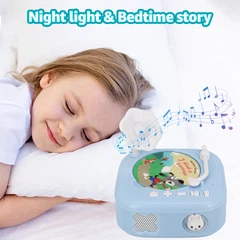
The bedroom scene highlights low-volume speech, gentle light and easy control access. A useful lifestyle test measures clarity and handling at bedside distance instead of judging the player only in a quiet engineering room.

Use staged prototypes instead of one overloaded sample
A look model can approve castle proportions and color. A bench build can prove card recognition and audio. A functional prototype can combine controls, light and sound in a provisional enclosure, while a production-intent sample validates the final stack and instructions.
Give every round a question list and freeze only the decisions it can actually prove. This prevents a beautiful early render or cosmetic sample from being mistaken for validated electronics.
Buyer checkpoint: turn this decision into an owner, sample revision, test condition and pass/fail record. Repeat the check whenever housing, electronics, firmware, audio, card materials or packaging changes.
Write the OEM quotation around controlled inputs
Useful inputs include target market, age direction, card quantity, content type, languages, offline or connected preference, expected controls, colorways, branding and packaging. Commercial details should be confirmed only after the technical scope is sufficiently clear.
A supplier response should separate confirmed base scope, selectable options and unresolved questions. That structure helps procurement compare like with like instead of treating different architectures as equivalent offers.
Buyer checkpoint: turn this decision into an owner, sample revision, test condition and pass/fail record. Repeat the check whenever housing, electronics, firmware, audio, card materials or packaging changes.
Approve quality with a golden sample and logs
The golden sample should include the exact enclosure, controls, cards, firmware and audio package used for approval. Photographs alone cannot preserve recognition timing, dial feel, light behavior or error prompts.
Keep a checklist with the unit and repeat it after component, material, firmware or content changes. Include card placement, playback, sound, charging, stability, finish and packaging recovery.
Buyer checkpoint: turn this decision into an owner, sample revision, test condition and pass/fail record. Repeat the check whenever housing, electronics, firmware, audio, card materials or packaging changes.
Keep every public claim tied to the selected version
The same castle housing could support different playback, storage and lighting routes. Product copy, instructions and packaging must describe the version that was engineered and tested, not every option discussed during development.
Maintain a claim sheet linking each statement to a sample revision and evidence. This protects the buyer when future variants reuse the appearance but change electronics or content service.
Buyer checkpoint: turn this decision into an owner, sample revision, test condition and pass/fail record. Repeat the check whenever housing, electronics, firmware, audio, card materials or packaging changes.
Preserve every approved interaction in the golden sample record before pilot production, packaging sign-off and planning future content or color variants.
Move from a charming castle to controlled evidence
A successful OEM castle story player keeps the visual magic while making every interaction measurable. Freeze the playback promise, protect the distinctive silhouette and verify cards, controls, sound, power and packaging on production-intent samples before scaling.
For related sourcing context, read our kids story player OEM/ODM guide. Joy also shares visual product-development updates for buyers reviewing new concepts and prototypes.
FAQ
Can the castle colors, cards and packaging be customized?
Yes. Housing colors, printed artwork, story cards, branding and packaging can be developed through separate approval tracks and physical samples.
Does the pictured player confirm NFC or connected playback?
No. The images show a concept. Card recognition, storage and connectivity depend on the chosen architecture and must be specified and tested.
What should a buyer provide for quotation?
Share the market, age direction, content plan, languages, preferred card route, controls, artwork, packaging goal and any required platform integration.
Why test cards after enclosure and packaging changes?
Wall thickness, internal components, coatings, insert pressure and transport can affect recognition, handling and playback reliability.
Discuss the castle story player brief directly with Joy: WhatsApp +86 13691793052 · E-mail: xdt05@dtdianzi.com.
Hot Tags: custom castle gramophone story player manufacturer, China, suppliers, manufacturers, factory, customized, wholesale, bulk, quotation, made in China


