

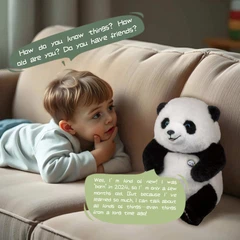
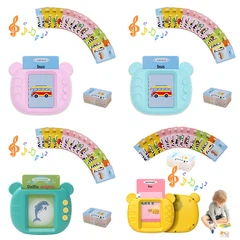
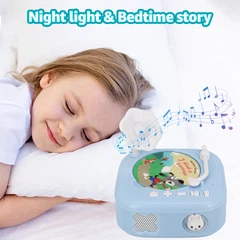
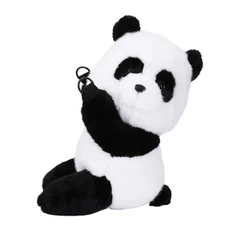


Emma was not ready for bedtime. Again. Every night, the same pattern: lights out, fear of monsters, requests for one more drink, another story, another hug. Her mother, working full-time, needed something that could hold Emma's attention and calm her mind without adding more screen time to the day. The answer arrived in the form of a soft, talking panda.
From the first night, the panda became part of the bedtime routine. Emma would tuck it beside her, whisper a worry, and the panda would respond with a gentle voice and a soft, glowing heart in its eyes. There was no tablet, no bright screen, no video autoplay. Just a warm presence that seemed to listen.
This kind of story is becoming common in homes around the world. Parents are actively searching for emotional support tools that feel safe, familiar, and non-digital. A soft companion that can talk, react, and comfort is filling a space that screens have struggled to occupy - the space of calm, connected, physical presence.
Dr. Alice Park, a family therapist based in Singapore, explains: "Children often process emotions through objects before they can process them through words. A plush companion that responds to a child's feelings gives them a sense of being heard, even when no adult is available. It becomes a bridge between the child's inner world and the external world."

What Emotional Moments Does the Panda Address?
The following table connects common childhood emotional moments with the everyday struggles parents face and how a responsive plush companion can offer support.
| Emotional Moment | Parent's Struggle | How the Comfort Panda Helps |
|---|---|---|
| Bedtime anxiety | Child refuses to sleep alone or fears the dark | Calm voice and soft glow create a reassuring presence that stays with the child all night |
| Loneliness after school | Working parents cannot always be present immediately | The panda offers a non-judgmental listener for the child's stories, complaints, and dreams |
| Social stress at school | Child has difficulty talking about friendship problems | The panda gives the child a safe "practice partner" for expressing feelings and rehearsing conversations |
| Medical or travel anxiety | Unfamiliar environments trigger fear | A familiar, soft companion with a recognizable voice provides continuity and comfort |
| Screen-free downtime | Parents want alternatives to phones and tablets | The panda engages the child through conversation and touch without any screen or internet connection |
A 2025 study by the Asia-Pacific Child Wellbeing Institute found that children who had a responsive comfort object during bedtime routines fell asleep an average of 18 minutes faster and reported fewer nighttime wake-ups than those using passive stuffed animals. The key factor was not the toy itself, but the child's perception that the toy was "paying attention" to them.
How Does a Soft Companion Help With Childhood Anxiety?
Anxiety in young children often shows up as avoidance, tantrums, or nighttime requests rather than as clear verbal statements. A child who says "I don't want to go to bed" may actually be saying "I am scared of being alone." A responsive companion helps translate these feelings into manageable interaction.
The panda's voice responses are designed to be calm, predictable, and non-judgmental. When a child expresses frustration, the panda does not lecture or dismiss. It responds in a way that validates the feeling and gently redirects toward a calmer state. For children who are still learning to name their emotions, this mirroring is a powerful developmental tool.
Dr. Park adds, "The panda does not replace a parent or therapist. What it does is provide continuity of comfort. A child can say the same worry to the panda ten times without exhausting an adult's patience. That repetition is exactly how children process anxiety and build self-regulation."
Why Is a Screen-Free Design Important for Emotional Play?
Modern parenting increasingly involves managing screen time. A 2025 global survey by the Digital Parenting Network found that 71% of parents worry about how much time their children spend with screens, and 63% say they would prefer more screen-free alternatives for emotional play and quiet time.
The panda is designed for exactly this need. It requires no app, no subscription, no scrolling, and no advertisements. The interaction is physical - a hug, a pat, a whisper - and the response is immediate. This keeps the child anchored in the real world while still benefiting from interactive technology.

What Do Parents Notice in the First Few Weeks?
Parents who introduce the panda as a comfort companion often report a similar pattern. The first few days are about novelty - the child explores the voice and expressions. By the second week, the panda starts to become part of routines: bedtime, car rides, after-school wind-down. By the third week, many parents notice the child seeking the panda during moments of frustration or sadness without being prompted.
This progression from "toy" to "comfort object" to "emotional anchor" is what distinguishes the panda from a typical plush toy. It is not merely soft; it becomes meaningful.
FAQ
Q1: How can this help a child who is afraid of the dark? A1: The panda provides a calming voice and a gentle glow that can stay with the child through the night. Children often feel less alone when they have a responsive companion beside them.
Q2: Can the panda help a shy child practice talking? A2: Yes. Many children find it easier to speak to a non-judgmental companion than to adults. Regular conversation with the panda can help build confidence and verbal expression.
Q3: Will it become another screen-time problem? A3: No. The panda has no screen and no internet connection. It is designed specifically as a screen-free interactive alternative.
Q4: How should I introduce the panda to my child? A4: Present it as a special friend. Let the child discover the voice and touch responses naturally. Avoid framing it as a learning tool or homework helper at first.
Q5: Can it help during long car rides or flights? A5: Yes. The panda is soft, portable, and operates without connectivity. It can provide calm conversation and comfort during travel, medical visits, or other stressful outings.
Q6: Is it suitable for children with sensory sensitivities? A6: The plush exterior is soft and the voice is gentle. The interactions are simple and predictable. Many children with sensory preferences find it calming rather than overstimulating.
Q7: What if my child becomes too attached to the panda? A7: Healthy attachment to a comfort object is normal and generally supports emotional development. The panda is a tool for comfort, not a replacement for human connection, and can help children feel secure enough to explore the world.
Q8: Can siblings share one panda? A8: Yes, though many families find that each child benefits from having their own companion. The panda responds to the child interacting with it, so sharing works during playtime but may feel less personal at bedtime.
Contact us for OEM/ODM inquiries, bulk pricing, and customization details.

📧 happy@xinditai.com
📞 +86-138-2434-3309
🌐 www.kidsoundbook.com
🏢 SHENZHEN XINDITAI ELECTRONIC CO., LTD
Hot Tags: comfort panda plush bedtime companion emotional support anxiety relief screen free cuddly soft toy gift, China, suppliers, manufacturers, factory, customized, wholesale, bulk, quotation, made in China


