

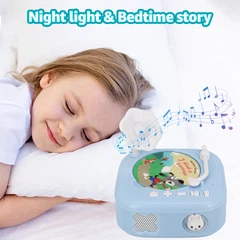
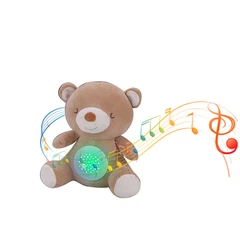



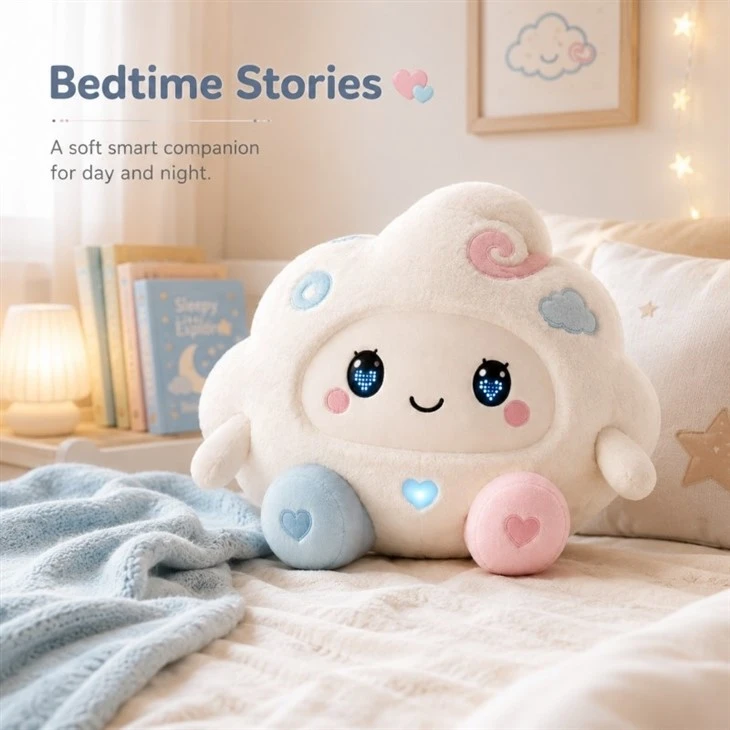
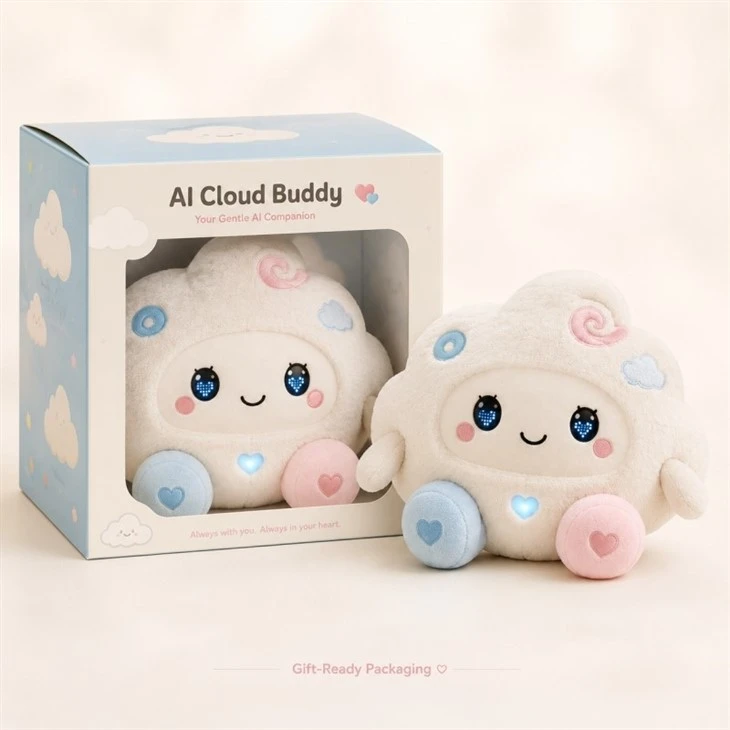
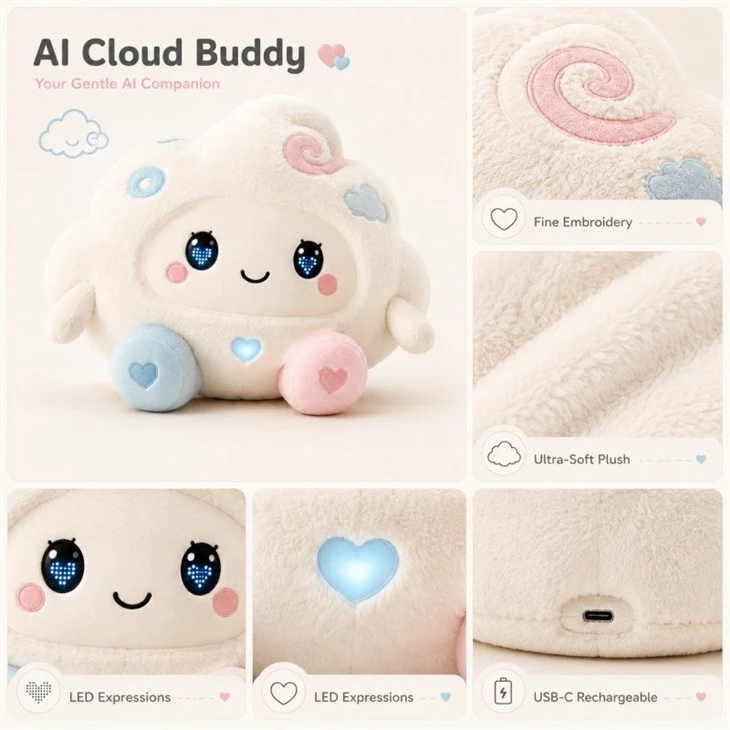
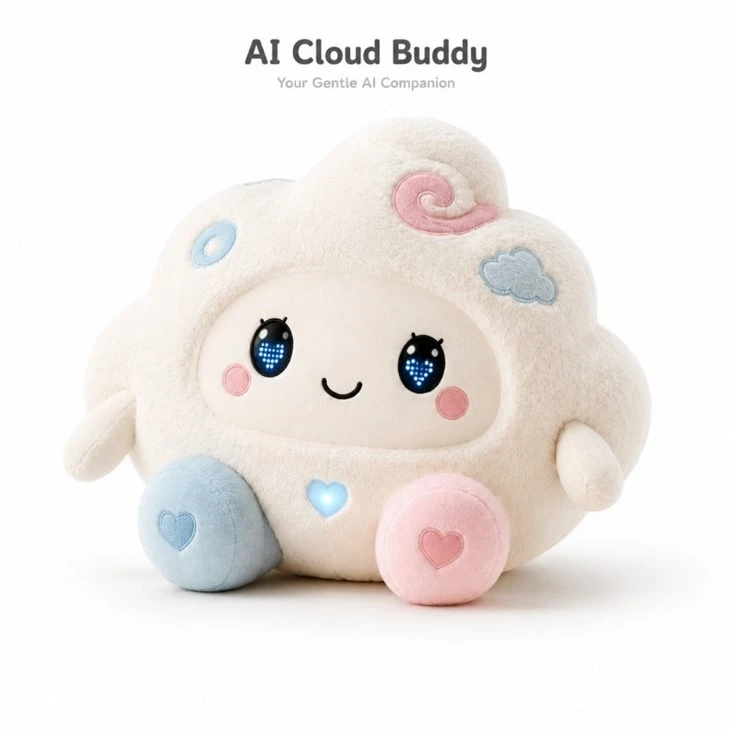
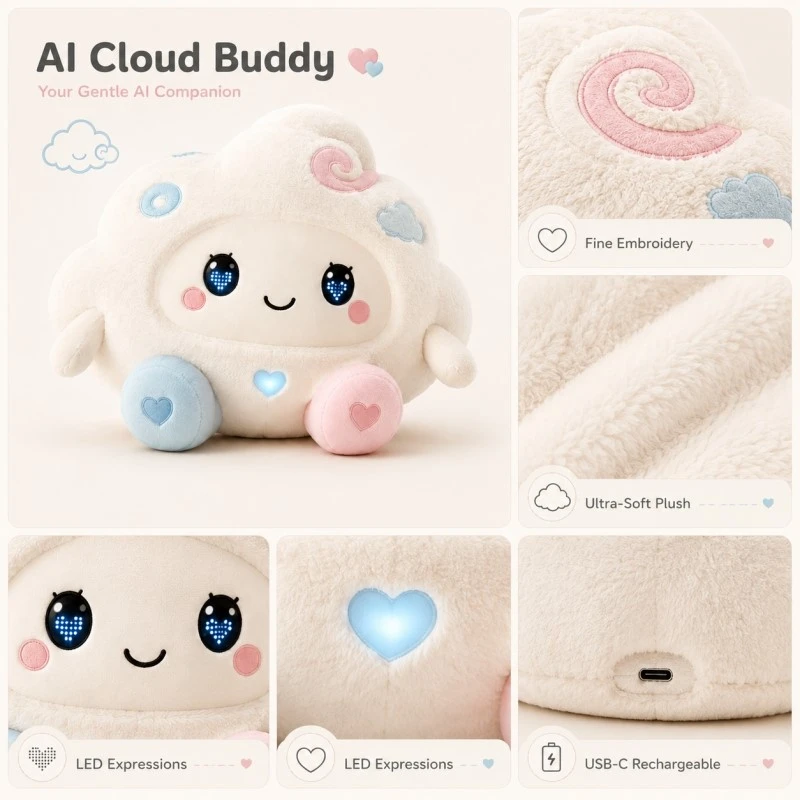
Every parent knows the transition. Lights out. Door half-closed. The soft sound of a child settling into bed - followed, moments later, by a small voice calling out. "I'm not tired." "Can you stay?" "What if I have a bad dream?" The Cloud Buddy was designed for this exact moment. Not to replace the parent, but to offer something a parent cannot: a gentle glow that stays all night, a soft presence that never leaves.
The transition from awake to asleep is one of the most vulnerable moments in a young child's day. The room goes dark. The sounds of the household fade. The child is left alone with their thoughts. For many children, this transition triggers a low-level anxiety that manifests as requests for another story, another hug, another glass of water.
A 2024 study published in the Journal of Pediatric Sleep Medicine found that children aged 3 to 6 who used a soft, light-emitting comfort object during the sleep transition fell asleep an average of 14 minutes faster than those who relied on a parent's presence alone. The study noted that the combination of tactile softness and a warm, dim light created a sensory environment that signaled safety without requiring adult intervention.
Dr. Lena Torres, a developmental behavioral pediatrician at Boston Children's Hospital, explains: "The bedtime ritual matters more than most parents realize. A consistent, predictable object that signals 'it is time to sleep' - especially one that offers both something to hold and something to see - creates a powerful conditioned cue. After two to three weeks of consistent use, the child's brain begins to relax the moment they pick up that object."
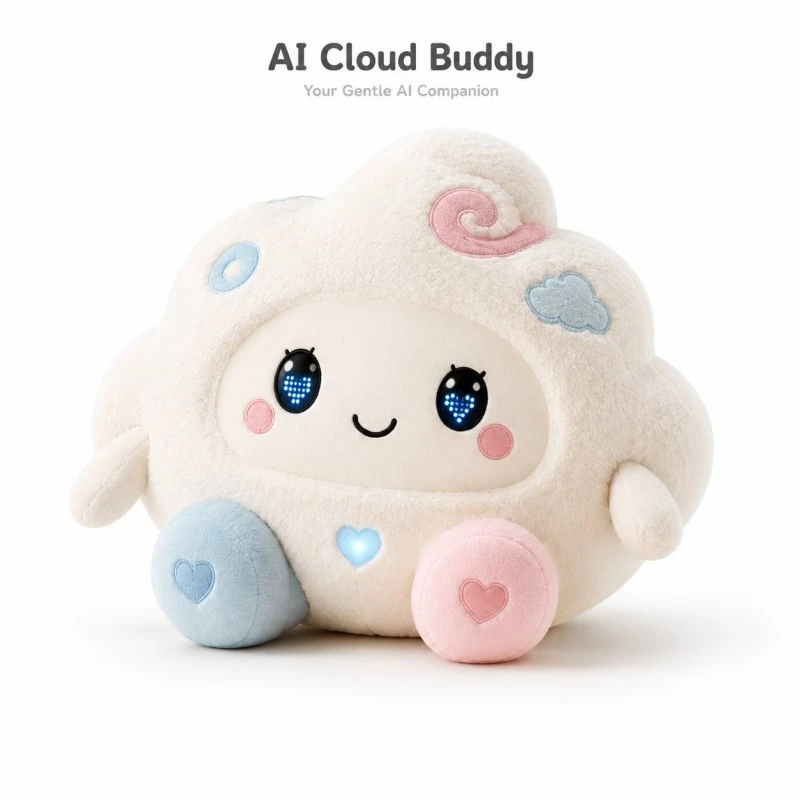
How Does a Warm Light Change the Sleep Environment?
The following table maps common bedtime challenges to the specific physical and emotional support the Cloud Buddy provides through its design.
|
Bedtime Challenge |
What Happens at That Moment |
How the Cloud Buddy Helps |
|
Fear of darkness |
Room goes dark, child loses visual reference |
Warm glow provides a gentle point of light that stays within arm's reach |
|
Separation anxiety |
Parent leaves, child feels alone |
Soft, warm presence in the bed provides continuity - the Cloud Buddy does not "leave" |
|
Over-tired resistance |
Child fights sleep despite exhaustion |
Steady glow and soft plush soothe the nervous system without requiring active interaction |
|
Night waking |
Child wakes disoriented in the dark |
Recognizable glow reassures the child they are in their own bed and safe |
|
Transition between rooms |
Travel or new environment disrupts routine |
Familiar glow and texture provide consistency - same companion in any room |
A 2025 survey by the Pediatric Sleep Council reported that 67% of parents who introduced a light-emitting comfort object observed a measurable improvement in their child's ability to self-settle within two weeks of consistent use. Among respondents, the most frequently cited benefit was not the light itself, but the fact that the child reached for the object independently - without being reminded by the parent.
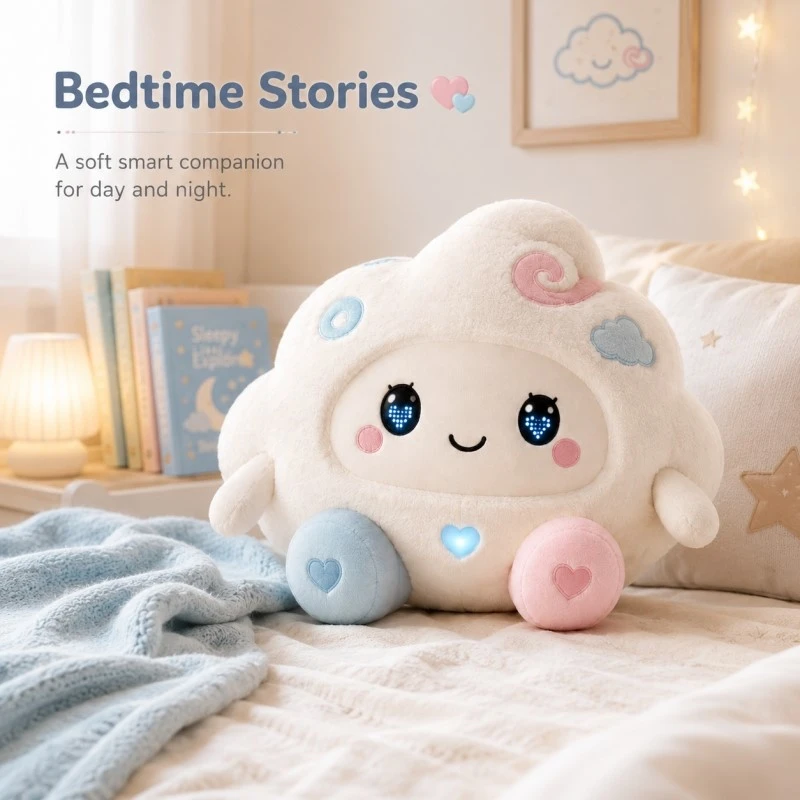
Why Touch Combined With Light Matters at Bedtime
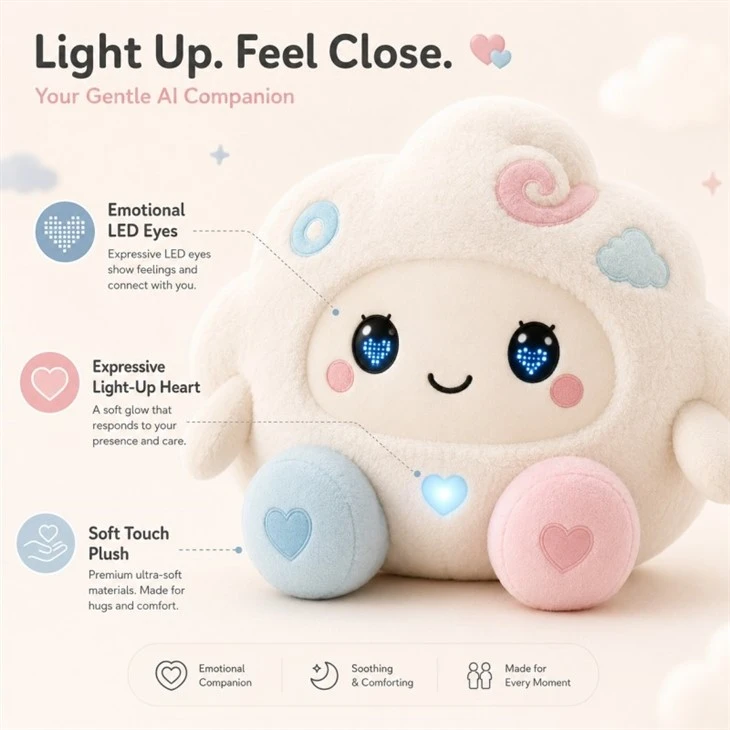
The Cloud Buddy's touch-responsive glow creates a feedback loop that supports self-regulation. When a child squeezes the toy, the heart glows a little warmer for a few seconds. This immediate, predictable response rewards the act of reaching out and provides sensory feedback that is both visual and tactile.
For a child learning to calm themselves to sleep, this feedback is meaningful. They are not waiting for a parent to respond. They are not calling out for reassurance. They are touching, feeling warmth, seeing a soft glow, and settling back into sleep - all without leaving their bed.
The dual sensory input - soft fabric against the cheek, warm light through closed eyelids - works together to down-regulate the nervous system. This is the same principle behind weighted blankets and white noise machines, but in a form factor that is portable, personal, and lovable.
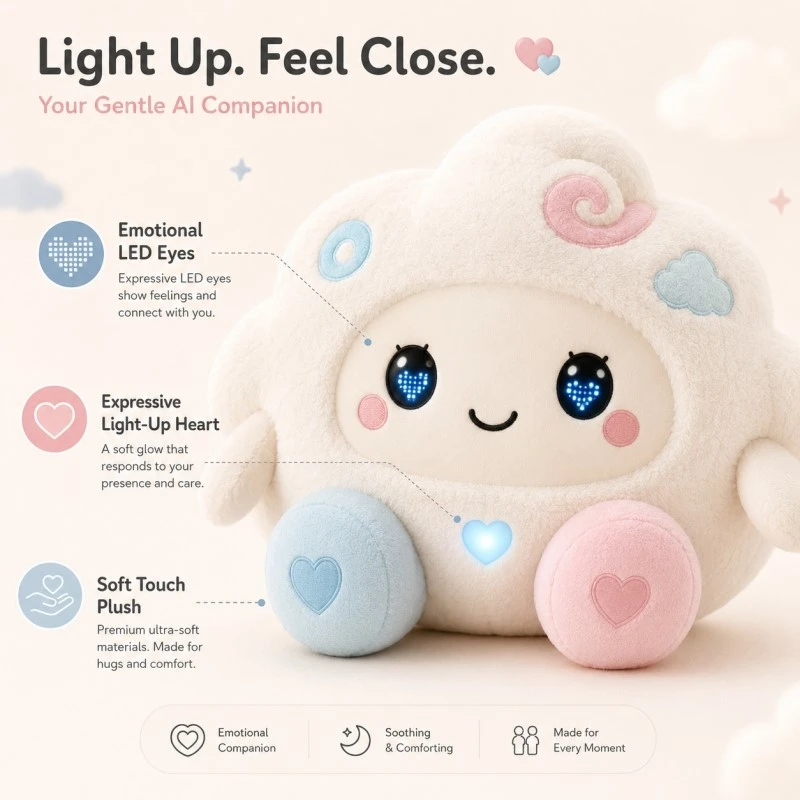
How Does the Cloud Buddy Fit Into a Bedtime Routine?
Parents report that the Cloud Buddy is most effective when introduced as part of a consistent three-step bedtime ritual:
Step 1 - The parent and child read a story together. The Cloud Buddy sits beside the child, glowing gently. Step 2 - The parent tucks the child in and places the Cloud Buddy within arm's reach. The glow is visible in the dim light. Step 3 - The parent leaves the room. The Cloud Buddy stays. The glow continues. The child has something to hold and something to look at.
Within one to two weeks, most children begin reaching for the Cloud Buddy independently at step two, without waiting for the parent to hand it to them. This is the signal that the toy has become part of the child's internal bedtime cue system.
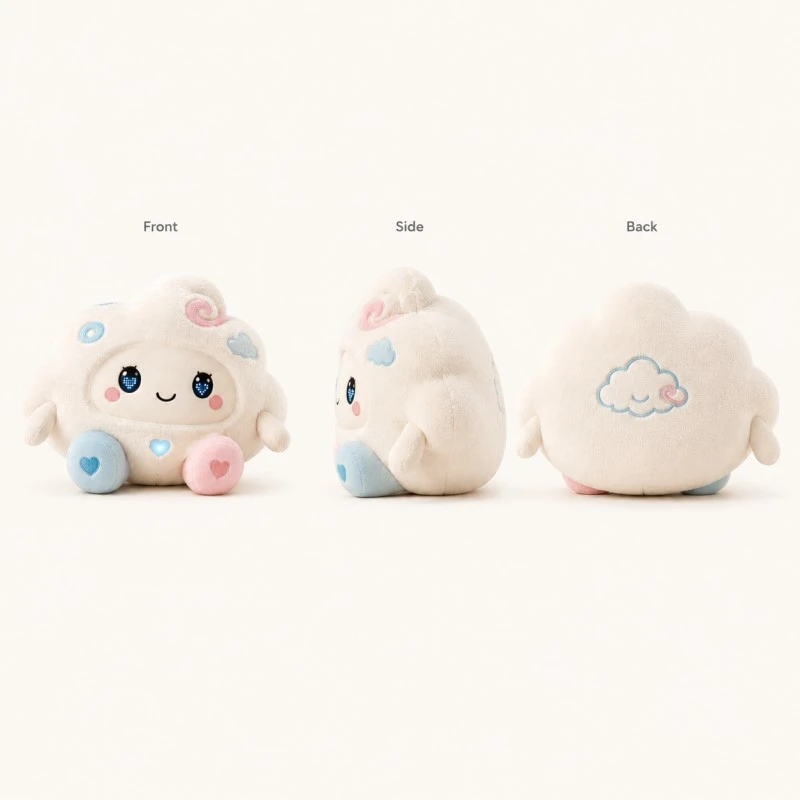
What Do Parents Notice in the First Month?
Parents who introduce the Cloud Buddy as a sleep companion report a consistent progression. In the first few nights, the novelty of the glow may delay sleep slightly - the child explores the light. By night four or five, the curiosity subsides and the child begins to associate the glow with settling down. By the end of the second week, most parents report that their child reaches for the Cloud Buddy automatically at bedtime. By the one-month mark, many children bring the toy to bed unprompted and fall asleep without calling out.
Dr. Torres adds, "The most encouraging feedback I hear from parents is not about sleep duration - it is about the child's growing independence. A child who can self-settle at bedtime has taken a meaningful step toward emotional regulation that will benefit them far beyond the nursery years."
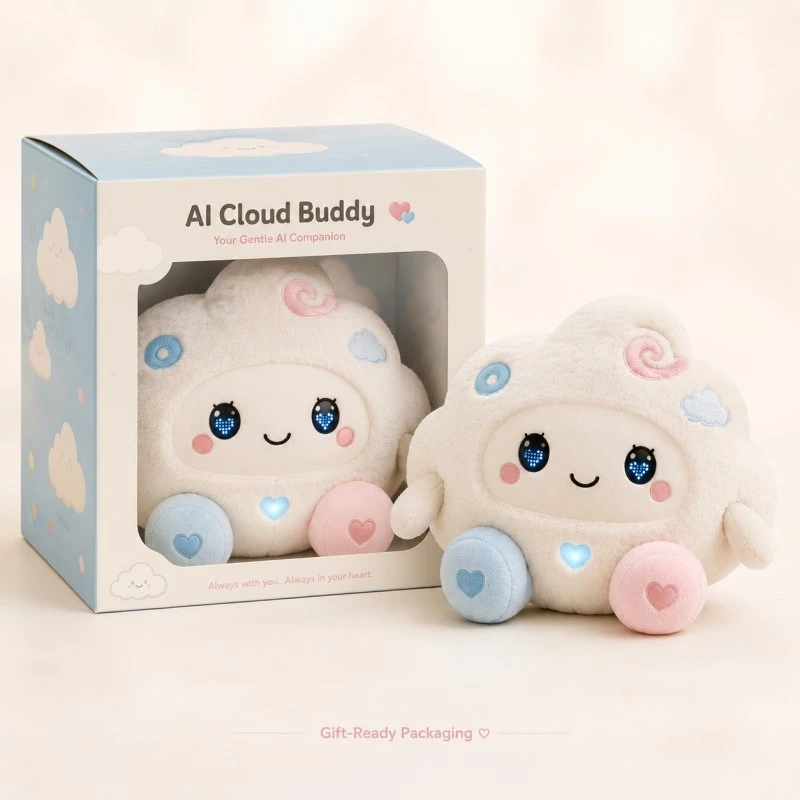
FAQ
Q1: How should I introduce the Cloud Buddy to my child? A1: Start during the pre-bedtime calm period. Show your child how the glow responds to touch. Place it near them during story time. Let them explore the light before it is "sleep time."
Q2: Will the light keep my child awake? A2: The light is intentionally dim and warm - designed to soothe, not stimulate. Unlike blue-light screens or bright ceiling lights, the warm amber glow does not suppress melatonin production.
Q3: How long does it take for a child to get used to it? A3: Most children adapt within three to seven nights. The first night or two may involve curiosity about the glow. By night four or five, the novelty fades and the comfort value takes over.
Q4: What if my child loses interest after a few days? A4: Consistency is key. Keep the Cloud Buddy in the bed every night, even if the child does not reach for it. The routine of seeing it there matters. Interest often returns after a brief pause.
Q5: Can this replace a bedtime story? A5: No. The Cloud Buddy is a sleep companion, not a storyteller. It supports the sleep environment but does not replace parent-child bonding time during the pre-bed routine.
Q6: Is this suitable for toddlers transitioning to a big bed? A6: Yes. This transition is one of the most common triggers for nighttime anxiety. A consistent comfort object with a gentle glow can provide the security a child needs in a new, larger sleeping space.
Q7: Can siblings share one Cloud Buddy? A7: They can share during daytime play, but each child benefits from having their own sleep companion. The glow and touch response are personal - each child forms their own attachment.
Q8: Does the Cloud Buddy work during naps as well? A8: Yes. The portable size and dim glow make it suitable for nap time, whether at home, in daycare, or during travel. The sleep association transfers to any environment.
Contact us for OEM/ODM inquiries, bulk pricing, and customization details.
📧 happy@xinditai.com 📞 +86-138-2434-3309 🌐 www.kidsoundbook.com 🏢 SHENZHEN XINDITAI ELECTRONIC CO., LTD
Hot Tags: cloud plush night light soothing sleep companion toy kids bedtime cozy glow comfort gentle soft nursery gift, China, suppliers, manufacturers, factory, customized, wholesale, bulk, quotation, made in China


