



AI Interactive Teddy Bear: Full Quality Control Standards for Smart Talking Plush
The Hidden Cost Behind Low-Priced Smart Plush Toys 🧵
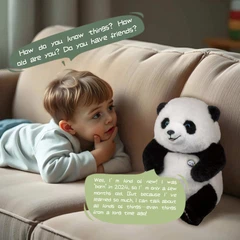
Most product advertisements only highlight smart functions like AI chat or light-up eyes, but few mention the quality control standards behind production. For a toy that stays in close contact with children's skin every day and even sleeps beside them, invisible quality details are the core factor that determines safety and durability. As the market for AI interactive teddy bears expands rapidly, a large number of low-cost products have entered the market with similar appearance but greatly reduced internal quality. This article breaks down the full testing standards a qualified smart plush toy must pass, from fabric and electronics to optics and structure, and compares the common cost-cutting practices of budget products.

Fabric Quality Control: The First Line of Defense for Daily Cuddling
Soft, skin-friendly fabric is the most basic requirement for a plush toy, yet it is also where low-cost products cut corners most aggressively. Children rub, hug and even bite plush toys during play, so fabric quality directly affects skin safety and respiratory health. High-quality products complete multiple rounds of testing before mass production, while most budget options skip these steps entirely.
| Test Item | Low-Cost AI Plush | Premium AI Interactive Teddy Bear |
|---|---|---|
| Pilling & shedding rate | >15% after 100 rubs | <3% after 500 rubs |
| Saliva color fastness | Grade 2–3 (fades easily) | Grade 4–5 (no obvious fading) |
| Skin irritation test | No official testing | Passed human skin patch test |
| Flame retardant standard | No unified standard | Meets 16 CFR 1610 textile standard |
High shedding rate is the most common problem with cheap fabrics. Loose fibers can be inhaled by young children, causing throat discomfort or allergic reactions. Saliva color fastness is especially important for toddlers who like to bite toys - poor color fastness means dye substances can enter the child's mouth directly. Premium toys choose dense, short-pile fabric that maintains its texture after long-term use, and all materials pass third-party safety testing.

Electronic Module Safety: Hidden Risks of a GPT Powered Stuffed Animal ⚡
The built-in smart module is the core of a GPT powered stuffed animal, and it also carries the highest safety risks if poorly manufactured. Unlike ordinary electronic products, plush toys are often squeezed, dropped and even exposed to liquid such as saliva or spilled drinks. A qualified electronic module must be designed to withstand these daily scenarios.
Premium products adopt fully sealed electronic housings with IP44 level splash protection, which prevents saliva or small splashes from entering the circuit. The internal battery is equipped with an overcharge, over-discharge and short-circuit protection board to avoid safety hazards during charging. The module also passes 10kg compression testing to ensure it does not deform or break when a child lies on the toy.
Budget products usually use thin plastic housings without sealing structure, and some even omit battery protection boards, which brings risks of liquid leakage or short circuit during use. The USB-C charging port on high-quality models is also designed with a dustproof and waterproof silicone plug, extending the service life of the interface.

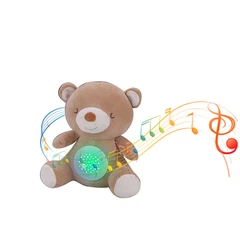
Optical Safety: What Makes a Reliable LED Emotional Eyes Teddy 💡
LED emotional eyes create interactive fun, but unregulated light output can cause long-term damage to children's developing eyes. Many consumers only notice whether the eyes light up, but ignore optical safety parameters such as blue light ratio, flicker frequency and glare control. This is a testing item that almost all low-cost light-up toys skip.
| Optical Parameter | Cheap Light-Up Plush | Qualified LED Emotional Eyes Teddy |
|---|---|---|
| Blue light ratio | >20% (high risk level) | <5% (RG0 risk-free level) |
| Flicker frequency | Low-frequency visible flicker | No visible flicker (≥3000Hz) |
| Brightness range | Single fixed high brightness | 3-level dimming, max ≤15cd/m² |
| Light diffusion | Bare LED direct emission | Soft diffuser lens, no glare |
The RG0 risk-free level means the light will not cause photochemical damage to the eyes even after long-term viewing. Premium toys also add a soft diffuser layer under the plush fabric, so the light is evenly dispersed instead of shining directly into the eyes. The brightness automatically dims in bedtime mode to avoid affecting children's melatonin secretion and sleep quality. Cheap products use ordinary highlight LEDs without any optical treatment, and long-term use may cause eye fatigue and affect vision development.

Structural Durability: How a Smart Talking Plush Survives Real-World Use 🧪
Children do not handle toys gently, so durability testing directly determines how long a smart talking plush will last in daily use. Many budget toys look complete when new, but break down within a month of normal play because they skip structural strength testing.
High-quality products complete a full set of reliability tests before leaving the factory. Seam tensile testing requires each centimeter of suture to withstand at least 30N of pulling force, preventing the toy from splitting and exposing internal electronic parts. The whole toy passes 1.2-meter drop testing 10 times in a row, with all functions working normally afterward. The built-in gyroscope motion sensor also undergoes angle calibration testing to ensure accurate touch response - petting the head triggers a warm reaction, and shaking triggers a playful sound, without false triggering or no response. Cheap products usually use thin suture thread and uncalibrated sensors, so they may break or fail to respond normally after a short period of use.
 Certification System: The Baseline of a Trusted Kids AI Companion Toy 📋
A genuine kids AI companion toy must pass full international safety certifications, which many low-price sellers skip or forge. Certifications are not just logos on packaging - they represent that the product has passed third-party testing on material safety, electrical safety and environmental protection.
Core certifications for export-grade AI plush toys include CPC for the US market, which sets mandatory safety requirements for all children's products; EN71 for the EU, which covers physical mechanical properties, flammability and chemical residue; RoHS, which restricts harmful heavy metals in electronic components; and ISO 9001 for production quality management. Formal brands will mark the complete certification number on the product packaging, which can be verified on the official certification platform. Consumers should avoid products that only print certification logos without specific numbers.
When choosing an AI interactive teddy bear, most consumers only compare visible functions and prices, and ignore the invisible quality control costs. A high-quality smart plush toy allocates a large part of its cost to safety testing, material upgrading and structural optimization that users cannot see directly. Budget products may seem to have the same functions on the surface, but they cut costs comprehensively in fabric safety, electronic protection and optical design, bringing potential health and safety risks.
For a toy that accompanies children every day and even sleeps with them, prioritizing quality control standards and formal certifications is more important than pursuing fancy extra functions. Understanding these testing standards can help consumers identify truly reliable products and avoid unsafe low-quality options.
Hot Tags: ai interactive teddy bear: full quality control standards for smart talking plush, China, suppliers, manufacturers, factory, customized, wholesale, bulk, quotation, made in China


